
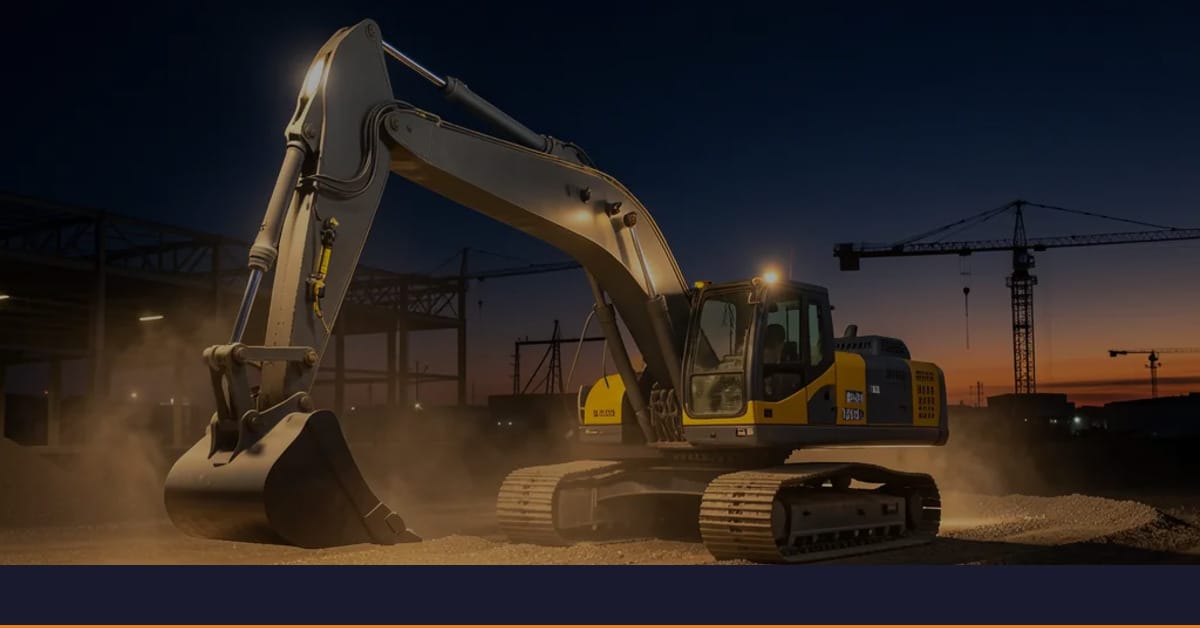
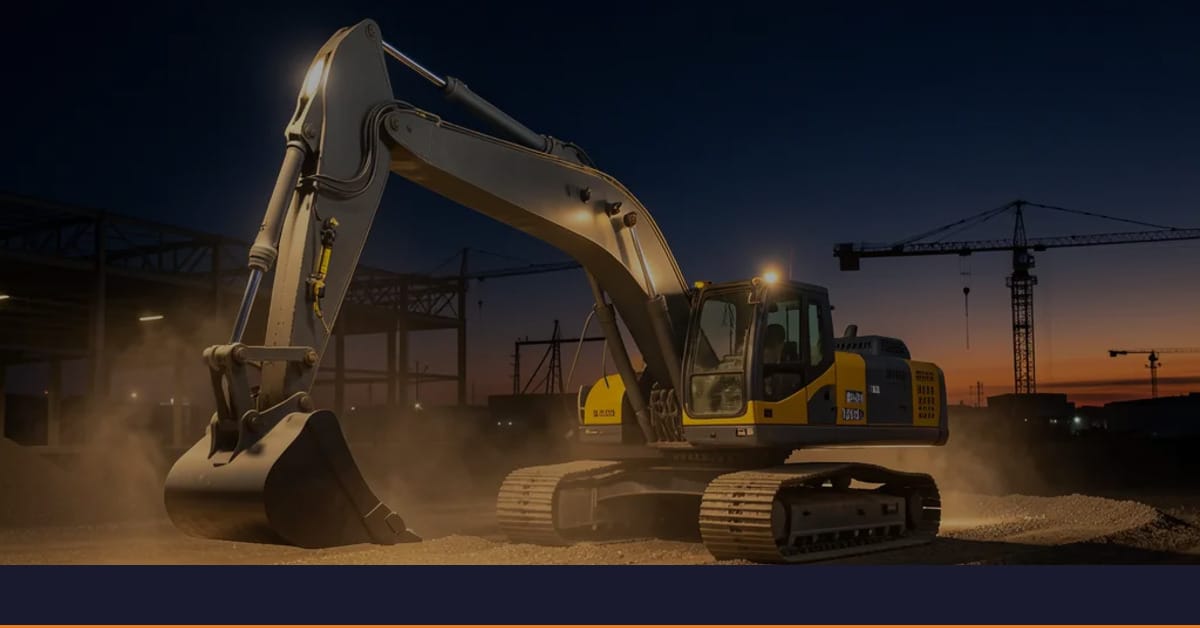
Electric Construction Equipment Market to Reach $13.81 Billion by 2033 as Electrification Accelerates
The global market for electric construction equipment is projected to grow from USD 3.81 billion in 2026 to USD 13.81 billion by 2033, representing a compound annual growth rate (CAGR) of 20.2%, according to a comprehensive new report from MarketsandMarkets published July 1, 2026.
The study — covering excavators, loaders, graders, dump trucks, and specialty equipment across electric, hybrid, and hydrogen propulsion — marks what analysts describe as a decisive shift from emission-compliance-driven adoption to genuine operational economics.
Electric Loaders Lead the Charge
Electric loaders accounted for the largest market share in 2026, and the segment is expected to maintain its dominance throughout the forecast period. Most skid-steer loaders, compact track loaders, and compact wheel loaders require battery capacities in the 40–150 kWh range — enough for a full shift without the weight penalty of larger battery packs needed for excavators and haulers.
OEMs including Volvo CE, Bobcat, CASE, JCB, and Caterpillar have all brought electric loader variants to market. LiuGong alone offers more than 40 electric models globally, including the 856HE full-size wheel loader with 10–12 hours of runtime.
Battery Chemistry: Li-NMC Gains Momentum
Lithium-nickel manganese cobalt oxide (Li-NMC) batteries are expected to be the fastest-growing battery chemistry in the segment. While LFP dominates compact equipment, NMC's higher energy density makes it the preferred choice for medium and large machines — 10-ton-plus excavators, articulated haulers, and mining trucks requiring 200–600+ kWh.
According to the MarketsandMarkets report, advances in battery technology have reduced pack costs to approximately USD 70 per kWh by 2025, significantly improving the economic viability of electric construction equipment. The >300 HP power-output segment is projected to grow at a staggering 35.9% CAGR as larger machines enter production.
Europe Emerges as Fastest-Growing Market
Europe is expected to be the fastest-growing regional market, driven by aggressive regulatory pressure and expanding zero-emission procurement mandates. The EU targets a 55% reduction in greenhouse gas emissions by 2030, while cities like Oslo aim for zero-emission construction sites by the same year. The Netherlands' Clean and Emission-Free Construction (SEB) program is accelerating adoption among contractors.
OEMs including Volvo CE, Liebherr, Komatsu, Hitachi Construction Machinery, and Caterpillar are prioritizing Europe for the launch of new electric excavators, wheel loaders, and articulated haulers.
Despite Europe's growth rate, Asia Pacific remains the largest regional market by volume, accounting for 70% of global electric construction equipment sales in 2026. China's established battery supply chain — anchored by CATL and BYD — and strong domestic OEMs such as SANY continue to drive volume.
From Compliance to Economics
The report's key finding is that the market narrative has shifted. Performance parity with diesel is now established — IDTechEx confirms that electric excavators and loaders match diesel counterparts on power, torque, and cycle times. The economic case is increasingly compelling: a 20-tonne electric excavator saves an estimated USD 12,620 per year in fuel alone, with maintenance costs reduced by up to 50% thanks to fewer moving parts and no oil or filter changes.
Volvo CE's EC230 Electric excavator and L120 Electric wheel loader, now available in North America, exemplify the trend toward mid-size electric machines that can match a conventional diesel shift. Caterpillar's 320 Electric and Komatsu's PC210E offer similar full-size alternatives with remote operation capabilities.
Challenges Remain
The report acknowledges significant hurdles. Higher upfront acquisition costs — typically 40–60% above diesel equivalents — remain the single biggest barrier. Charging infrastructure at job sites is still limited, and battery capacity for the largest mining trucks requires further development. Component standardization across platforms is also in its early stages.
Major OEMs are responding with fast-charging and battery-swapping solutions. Komatsu demonstrated a mobile megawatt charging system at bauma 2025, and several manufacturers are exploring hydrogen combustion and fuel-cell technology for high-utilization applications.
The complete 345-page MarketsandMarkets report — "Electric Construction Equipment Market by Type, Propulsion, Battery Capacity & Chemistry, Power Output, and Region — Global Forecast to 2033" — includes 135 market data tables and 78 figures.
Sources
- Electric Construction Equipment Market worth $13.81 billion by 2033 — MarketsandMarkets via PRNewswire — published 01 July 2026
- Electric Construction Equipment Market Report 2026–2033 — MarketsandMarkets — published July 2025
- Electric Construction Equipment Guide 2026: What's Available — Heavy Vehicle Inspection — published 23 February 2026