Russia's Uralvagonzavod delivers new T-90M and T-72B3M tanks ahead of Tanker's Day
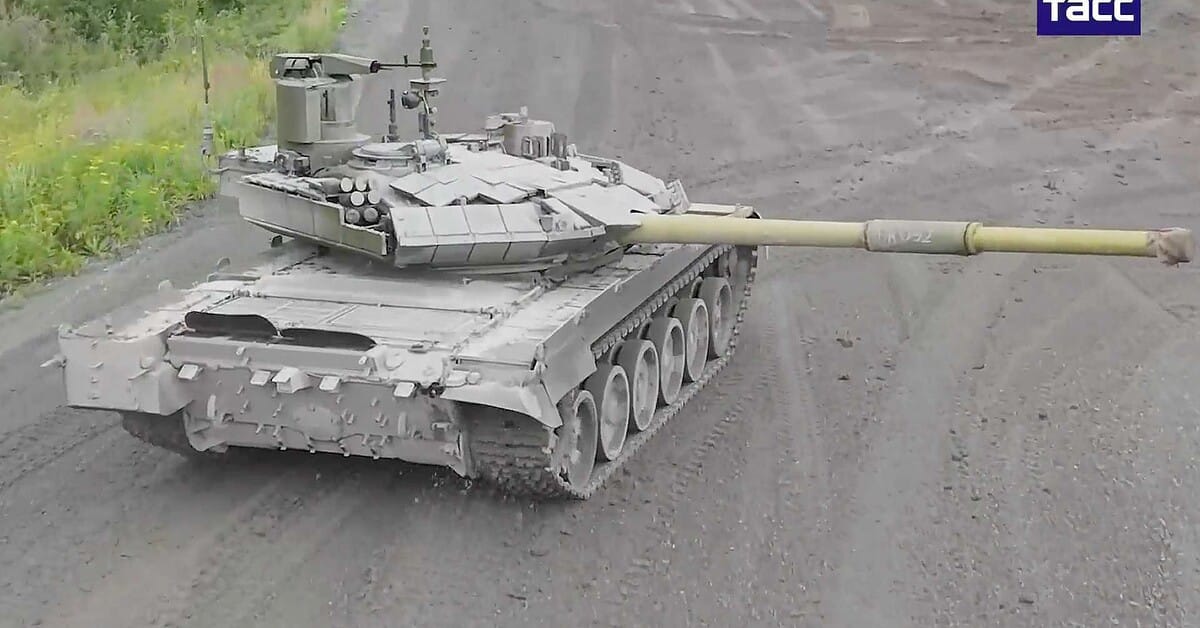
Uralvagonzavod (UVZ), part of Russia's Rostec state corporation, has delivered new batches of T-90M Proryv and T-72B3M main battle tanks to the Russian Army, the manufacturer said on 12 September 2026 — one day before Russia's Tanker's Day.
According to UVZ, the vehicles feature improved all-aspect protection developed from combat experience, with particular emphasis on countering first-person-view (FPV) drones. A Russian Defence Ministry representative quoted by the company said production commitments are being met on schedule, and that work to improve the protection and technical performance of the vehicles continues.
The company did not disclose how many tanks were included in the latest batches. UVZ said the upgrades are developed from feedback and requests from tank crews operating on the front line.
The T-90M Proryv is Russia's most advanced main battle tank in series production, combining a 125 mm smoothbore gun with upgraded fire control, improved armour and modernised electronics. The T-72B3M is a heavily modernised version of the Soviet-era T-72, rebuilt with improved sights, mobility and explosive reactive armour.
The delivery reflects the wider structure of Russia's armoured regeneration effort. Moscow has offset heavy wartime losses through a combination of new T-90M production, T-72 modernisation, battlefield repair and reactivation of vehicles from Soviet-era storage. Analyses by the International Institute for Strategic Studies (IISS) have noted that continued dependence on stored hulls is finite, as the most serviceable vehicles are withdrawn first.
Anti-drone protection has become a central driver of Russian tank design. Vehicles deployed in Ukraine have increasingly appeared with turret-roof cage armour and electronic countermeasures intended to reduce exposure to FPV attack — solutions that are now influencing factory configurations.
Sources
- Russia Delivers More T-90M and T-72B3M Tanks as It Rebuilds Combat Power in Ukraine — Army Recognition, 12 September 2026
- Russia delivers new batches of T-90M, T-72B3M tanks to military — Caliber.Az, 12 September 2026
- Russian Army Takes Delivery of New Batches of T-90M and T-72B3M Main Battle Tanks — Deagel, 12 September 2026