
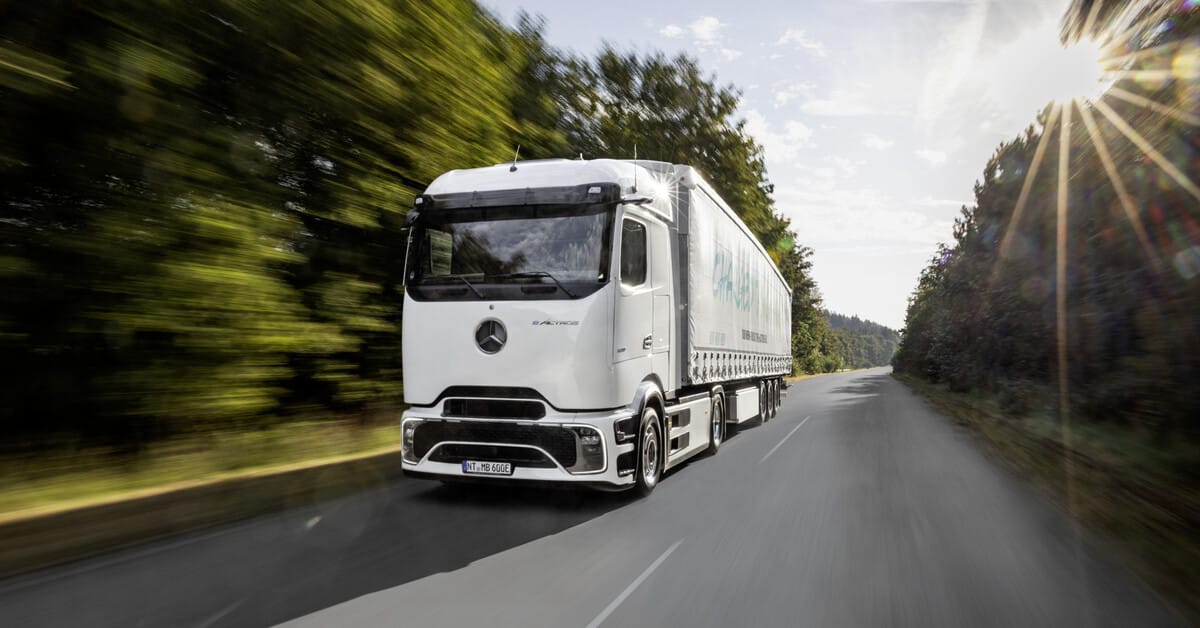
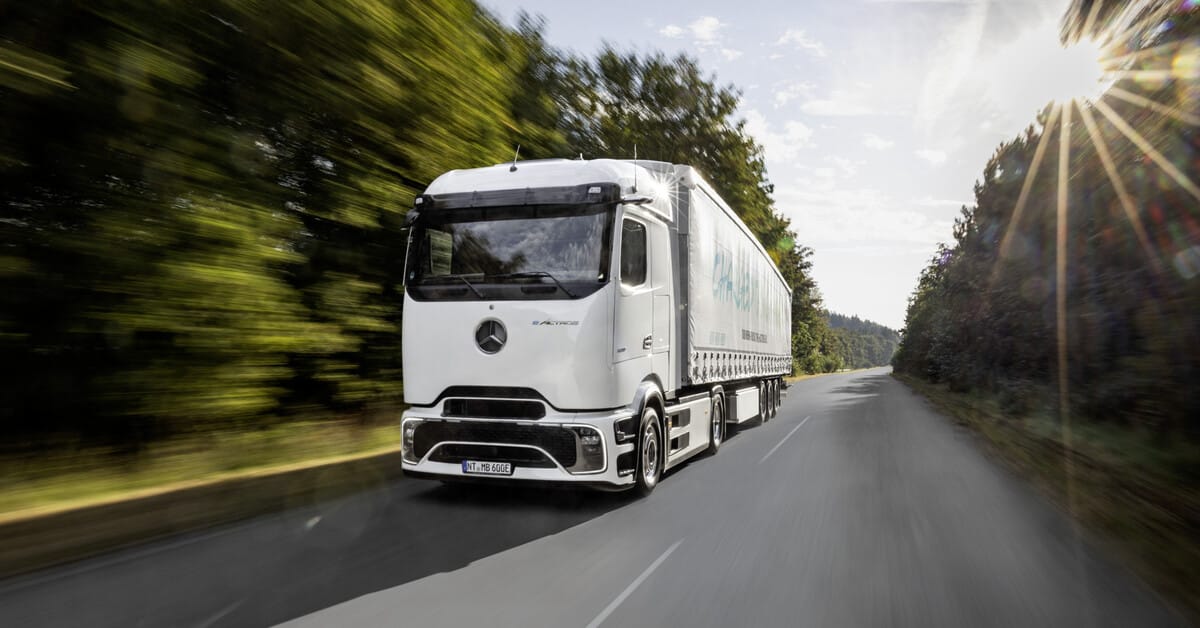
Mercedes eActros 600 Delivers Tesla-Like Efficiency in Real-World Winter Operations
Data from 80 Mercedes-Benz eActros 600 electric semi trucks operating in the manufacturer's own logistics fleet has provided the clearest evidence yet that battery-electric long-haul trucking is viable today — even through a German winter. The operational figures, drawn from daily revenue service across multiple routes, address the scepticism that has shadowed electric heavy trucking since the segment emerged.
Real-World Efficiency: 1.61 kWh/Mile at 36 Tons
The headline figure is compelling: the eActros 600 achieves 1.61 kWh per mile at an average combined weight of 36 metric tons. That places it in the same neighbourhood as the Tesla Semi's claimed 1.55 kWh/mile — a notable achievement for a conventional cab-forward design without the aerodynamic optimisation of Tesla's purpose-built platform.
What makes this figure particularly significant is the context. These are not test-track runs or curated press demonstrations. The data reflects 80 trucks operating daily in Mercedes-Benz's own logistics network, hauling genuine freight over defined routes. The average combined weight of 36 tons represents a realistic loading scenario that fleet managers will recognise as representative of daily operations.
Winter Performance: The Acid Test
Winter operation has been the biggest question mark for electric trucks in northern European climates. Cold weather reduces battery efficiency and demands cabin heating, compounding range anxiety precisely when operators need certainty.
Mercedes' data from November through February shows winter consumption of 100 kWh per 100 kilometres — the equivalent of roughly 11 litres of diesel per 100 kilometres in energy terms. On Europe's busiest long-haul corridor, the Wörth–Bielefeld route, the eActros 600 consistently delivers 600 kilometres of daily range, matching the truck's design target even in sub-zero conditions at full 40-ton gross vehicle weight.
The Business Case: €4,000 Per Month in Toll Savings
Efficiency figures matter, but fleet managers make decisions on total cost of ownership. Each eActros 600 saves approximately €4,000 per month in toll costs alone under Germany's weight-based Maut toll system, which waives fees for zero-emission heavy trucks. Combined with lower per-kilometre energy costs versus diesel, the TCO argument strengthens considerably.
On the environmental side, each truck eliminates approximately 90 metric tons of CO₂ equivalent annually compared to a diesel counterpart — the equivalent of taking roughly 20 passenger cars off the road per truck.
What Made It Work: Route Predictability
The success of the eActros 600 fleet is not accidental — it reflects deliberate operational design. The 80 trucks run predictable routes between Mercedes-Benz's centralised parts terminals with controlled return schedules. This allows precise battery state-of-charge management and optimised charging infrastructure planning.
For fleet managers evaluating electric trucks, the lesson is clear: battery-electric long-haul works when routes are regular, terminals have charging capacity, and return schedules are predictable. The trucks themselves have proven ready at scale; the next step is aligning fleet operations to match.
Outlook
With 80 units proving the concept across a German winter and efficiency figures competitive with the most advanced electric trucks on the market, Mercedes-Benz has closed the technology gap for electric long-haul trucking. The remaining challenge is operational at industry scale: charging infrastructure deployment, route planning tools, and fleet management systems that account for electric vehicle constraints.
For the European logistics industry, the message is unambiguous. The electric long-haul truck is no longer a prototype or a pilot project — it is a daily operational reality on German motorways. The next phase is about scaling deployment across the continent.
Sources
- Mercedes Posts Tesla-Like Efficiency Hauling 36 Tons Through a German Winter — Electrek — published 27 June 2026
- Mercedes-Benz eActros 600 — Product Specifications — Mercedes-Benz Trucks — accessed June 2026