
Less than three years after losing the JLTV A2 contract, Oshkosh Defense is positioning itself for a return to the program—this time as a second-source supplier for the US Marine Corps.
The Marine Corps published a Request for Information (RFI) on May 27, 2026, seeking a second supplier for its Joint Light Tactical Vehicle fleet. The move comes as current sole-source contractor AM General sits roughly 18 months behind schedule on A2 deliveries, with only a handful of vehicles produced to date. Responses are due by June 10.
Production Capacity vs. Delivery Reality
The numbers tell the story. Oshkosh Defense has delivered more than 24,000 JLTVs globally since production began in 2015, including over 6,000 to the Marine Corps alone. The company's Oshkosh, Wisconsin facility already has warm production lines, established supply chains, and a workforce that built the A1 variant for a decade.
AM General, awarded the JLTV A2 contract in February 2023 after a competitive bid that Oshkosh lost, has struggled to scale. The company told National Defense Magazine in October 2024 that it was six months behind schedule from the outset, partly due to a bid protest that prevented preliminary work. That timeline has since slipped further. AM General expects full-rate production to begin in summer 2026, but the Marine Corps needs vehicles now, not next year.
The gap contributed to Oshkosh announcing 160 layoffs in January 2026—a direct consequence of losing the A2 contract and the production volume that went with it.
What the RFI Demands
The Marine Corps' RFI outlines a potential requirement for up to 7,500 vehicles and 4,000 trailers over a five-year base contract with five additional option years. But the rapid-fielding timeline is the real headline:
- 3 production-representative vehicles within 90 days of contract award
- 50 vehicles and trailers within 10 months
These are aggressive targets that favor an incumbent manufacturer. Oshkosh remains the only supplier with a proven track record of JLTV production at scale. The company's response to the RFI reportedly emphasizes exactly that: combat-proven vehicles from existing production capacity, with no new vehicle development required.
Jennifer Moore, Marine Corps Program Executive Officer for Land Systems, left no ambiguity about the service's commitment. "Our requirement remains steadfast," she said. "We are replacing our entire Humvee fleet with the Joint Light Tactical Vehicle, period."
Retired Marine Corps Commandant General Robert Neller framed the logic plainly: "If they're behind… and Oshkosh can help them procure them faster, I think obviously, the Marine Corps would be interested in that."
Why This Matters Beyond a Single Contract
This is not just a story about one company winning back lost business. The JLTV program sits at a critical inflection point for US military tactical mobility.
The Army has paused JLTV acquisition in favor of evaluating lighter, more mobile platforms—a shift documented in the service's May 2025 transformation guidance. The Marine Corps, by contrast, is doubling down. With some 15,000 Humvees still in service waiting to be replaced, the service is committing to a unitary JLTV fleet independent of Army procurement decisions.
A second-source arrangement would also address a structural vulnerability: sole-source dependence. Having two qualified JLTV manufacturers—Oshkosh and AM General—provides production redundancy, supply chain resilience, and competitive pricing pressure over the program's lifecycle.
The Road Ahead
The RFI closes June 10. If Oshkosh submits a competitive response, the timeline moves quickly. A contract award later this year or in early 2027 would see Oshkosh delivering JLTVs to the Marine Corps for the first time since losing the A2 contract—potentially restoring hundreds of jobs in Oshkosh, Wisconsin, and accelerating the Marine Corps' Humvee replacement program by years.
For Oshkosh, it's a chance to re-enter a program it helped create. For the Marine Corps, it's a hedge against continued production delays. For the US defense industrial base, it's a case study in how production capacity—not just contract awards—determines battlefield readiness.
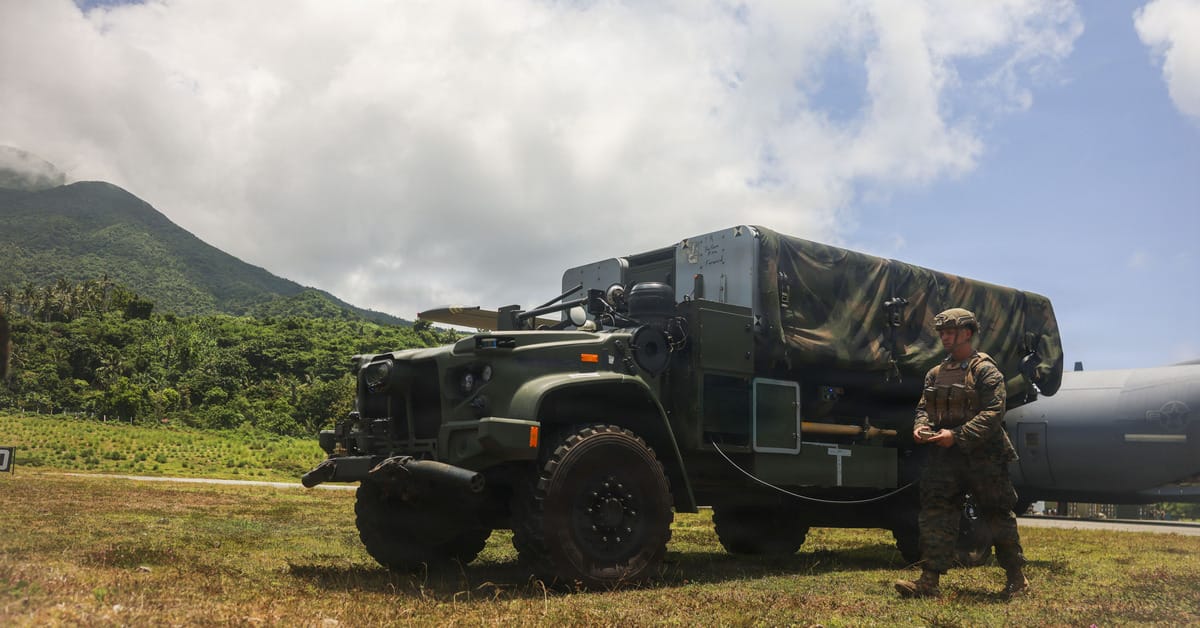
Cover image: US Marines drive JLTVs during Operator New Equipment Training at Camp Pendleton, California. (US Marine Corps photo by Lance Cpl. Drake Nickels)