Poland has signed contracts worth 60 billion złoty ($16.5 billion) to produce infantry fighting vehicles, self-propelled howitzers, support vehicles, and artillery ammunition — all built domestically by Polish defense manufacturers. The deals, signed May 30 at Huta Stalowa Wola in southeastern Poland, represent the first major tranche of the EU's Security Action for Europe (SAFE) loan program, where Poland is the single largest beneficiary with access to roughly €43.7 billion.
For the heavy industry sector, this is not merely a procurement story. It is a story about production capacity — new assembly lines, advanced welding shops, artillery forging facilities, and a domestic supply chain for everything from tracked hulls to 155mm shell casings.
What's Being Built
The centerpiece of the contract package is a batch of 146 Borsuk infantry fighting vehicles. The Borsuk is a fully tracked, amphibious IFV weighing approximately 28 tons, armed with a remotely operated turret carrying a 30mm autocannon and Spike anti-tank guided missiles. Produced by Huta Stalowa Wola — a subsidiary of state-owned PGZ — the vehicle replaces the Soviet-era BMP-1 in Polish service. Each unit involves extensive welded steel armor structures, track systems, powertrain integration, and turret assembly, making it a significant workload for HSW's production lines.
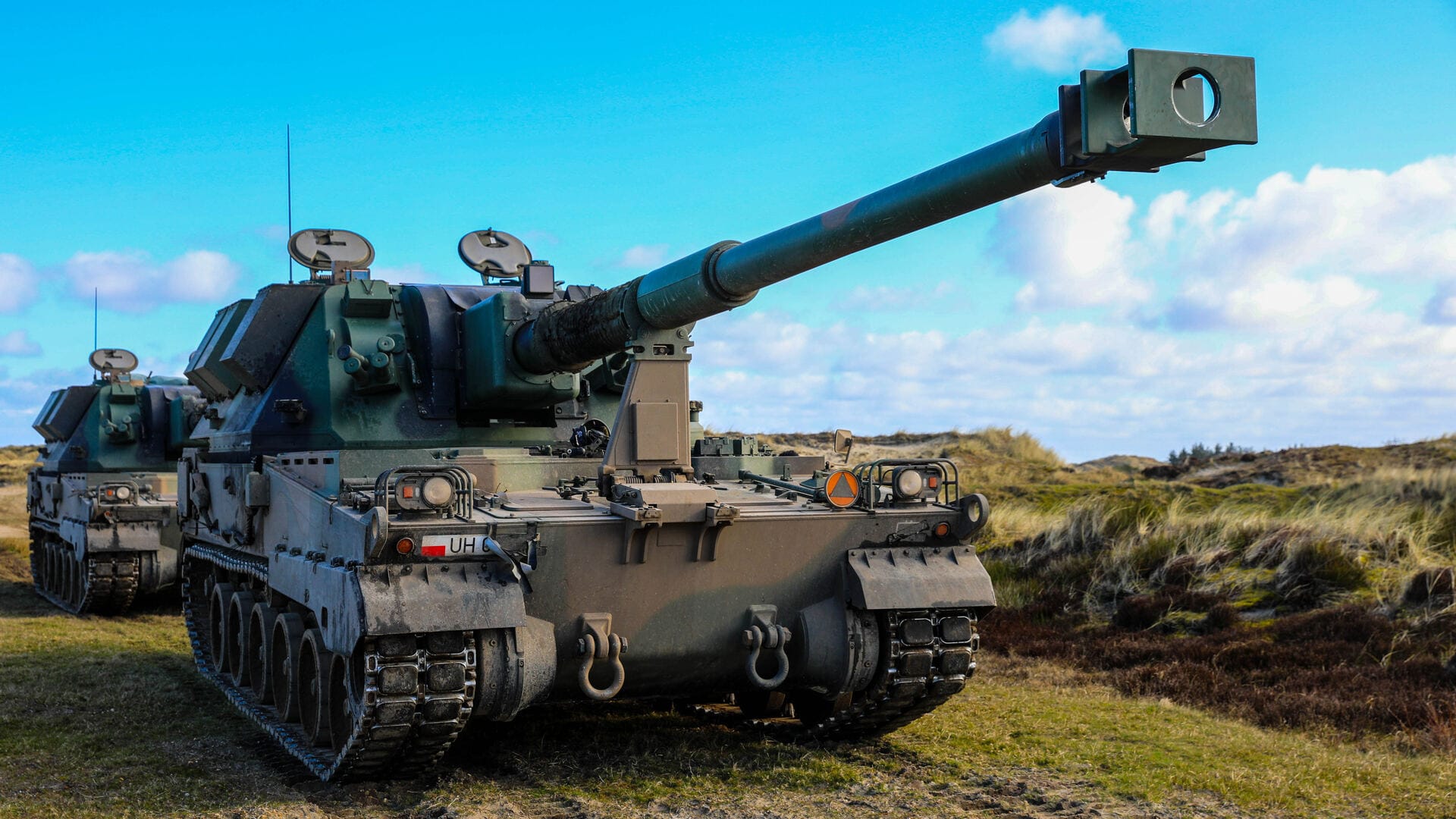
Ninety-six Krab 155mm self-propelled howitzers are also on order. The Krab is a tracked 155mm/52-caliber artillery system that combines a domestically produced turret with a Korean K9 chassis. Each howitzer weighs around 52 tons and can fire precision-guided rounds at ranges exceeding 40 kilometers. Producing 96 units means ramping up barrel forging, breech assembly, and hull welding to industrial scale.
Additional equipment includes 1,000 ammunition, command, and communications vehicles for the Homar-K multiple rocket launcher system, and 64 Rak 120mm self-propelled wheeled mortars mounted on Rosomak (Patria AMV) chassis.
In a separate contract valued at over 13 billion złoty, PGZ will produce several hundred thousand 155mm artillery shells — with the specific requirement that every shell body be forged in Poland and filled at Polish facilities using domestically produced TNT.
Industrial Scale and Independence
The production ramp-up is substantial. Poland's defense industry has historically operated at modest output levels, but these contracts demand a step change in manufacturing throughput. Huta Stalowa Wola alone will absorb roughly half of the total contract value, expanding its capacity to produce welded steel hulls, artillery barrels, and tracked chassis.
Arkadiusz Bąk, PGZ first vice president, emphasized the ammunition contract as a matter of industrial sovereignty: every one of the hundreds of thousands of ordered 155mm shells will be manufactured entirely within Poland, from steel forging to explosive filling. This mirrors the broader lesson European defense planners have drawn from Ukraine — that reliable access to artillery ammunition requires domestic production capacity.
Poland has also secured a technology partnership with BAE Systems (UK) to boost local artillery ammunition production, signed in September 2025.
Europe's Heavy Industry Shift
Poland already operates one of NATO's highest defense budgets as a share of GDP and has purchased American M1A2 Abrams tanks, South Korean K2 Black Panther tanks, HIMARS rocket systems, and Patriot air defense systems in recent years. What distinguishes this $16.5 billion tranche is that it channels investment almost entirely into Polish factories rather than foreign OEMs.
This is not about imports. It is about welding, machining, and assembly lines running in Stalowa Wola, Siemianowice Śląskie, and other Polish industrial centers. For European heavy industry, it signals a broader reindustrialization trend — defense spending increasingly flows into domestic manufacturing capacity rather than off-the-shelf foreign procurement.
Deputy Prime Minister and Defense Minister Władysław Kosiniak-Kamysz framed it explicitly: Poland must build production capacity not only for its own needs but for export. With delivery deadlines stretching to 2030, these production lines will serve the Polish military first and potentially allied forces after.
Bottom Line
Poland's $16.5 billion heavy weapons investment is a manufacturing story as much as a defense story. New hull welding lines, artillery barrel forges, ammunition filling plants, and assembly halls are being stood up across the country. For the European defense industrial base, it marks the beginning of a shift from buying abroad to building at home.