Rheinmetall Sells Civilian Auto Division in €350M Deal, Completes Pivot to Pure Defense
Rheinmetall has signed a definitive agreement to sell its struggling civilian Power Systems division to Munich-based industrial investment firm Aequita for a provisional €350 million (approx. $406 million), marking one of the final steps in the German defense giant's transformation into a pure-play defense contractor.
The deal, announced June 3, covers 100% of the shares in Rheinmetall's automotive components business. Closing is expected in the fourth quarter of 2026, subject to regulatory approvals. The sale triggers additional impairment charges of roughly €200 million, on top of the €350 million non-cash charge booked in December 2025 when the division was classified as a discontinued operation.
A Division That Couldn't Keep Pace
The Power Systems division, with approximately €2 billion in revenue in 2025 and 6,250 employees worldwide, has long been the laggard in the Rheinmetall portfolio. Built around the Pierburg, Kolbenschmidt, and Motorservice brands, the unit supplies engine components, pistons, actuators, and aftermarket parts to the global automotive industry — a sector that has faced shrinking margins, volatile demand, and the structural shift toward electrification.
"In particular, the further deterioration in the business situation in the automotive sector had an impact on the circumstances and terms of the final agreement," Rheinmetall said in a statement, acknowledging the headwinds that had been building for years.
Pure Defense, Full Throttle
The divestment unlocks Rheinmetall's ability to focus entirely on its booming defense business — a segment that has seen explosive growth since Russia's invasion of Ukraine triggered a European rearmament cycle without modern precedent.
Rheinmetall posted record consolidated sales of €9.9 billion in 2025, up 29% year-over-year, with defense revenue growing 30–35%. The defense order backlog hit a record €63.8 billion, and the company projects a staggering €135 billion backlog by year-end 2026 as massive German procurement programs — including a €12.5 billion Boxer armored vehicle package and a potential €37 billion in orders over the next four quarters — are booked.
CEO Armin Papperger called the sale "a significant milestone in the company's history," adding: "We are focusing on the high-margin business with military customers, where we have excellent growth opportunities."
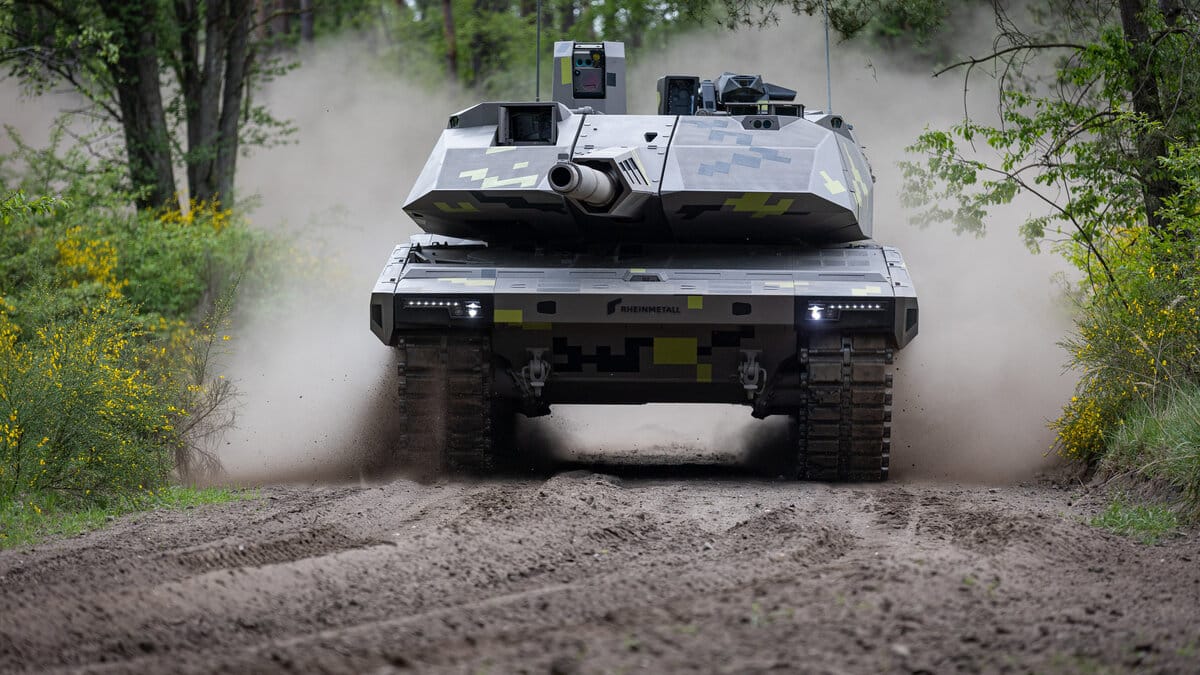
The numbers bear that out. Rheinmetall's Weapons & Ammunition segment, its most profitable, posted a 29% operating margin in 2025. The Vehicle Systems division — responsible for the iconic HX military truck family, Boxer armored vehicles, and logistics platforms — grew sales 32% to nearly €5 billion. Rheinmetall MAN Military Vehicles (RMMV) has delivered around 7,000 HX trucks to the Bundeswehr alone, with additional deliveries to Norway, Sweden, and other NATO allies under joint framework agreements worth billions.
What Aequita Gets
Aequita, an industrial investment group with a portfolio spanning automotive, chemicals, and industrials generating over €10 billion in annual revenue, takes over the division as an independent entity. All 6,250 employees will be retained, and the Pierburg, Kolbenschmidt, and Motorservice brands will continue under new ownership.
The acquisition brings Aequita's combined automotive division revenue to approximately €5 billion. Chairman and Co-CEO Dr. Axel Geuer said the firm plans to "actively support the long-term, successful and sustainable development of the company" and realize synergies within its existing automotive portfolio.
Not Everything Goes
Three entities are excluded from the sale. The KS Huayu AluTech joint venture (aluminum casting, three German sites) remains with Rheinmetall as a discontinued operation slated for future divestment. The Dermalog SensorTec automotive sensor business stays permanently and will be integrated into the Weapon and Ammunition division. Most notably, the Pierburg Abadiano plant in Spain — a former civilian production site — will be repurposed as a hybrid military-civilian facility, a concrete example of how Rheinmetall is converting automotive capacity to meet defense demand.
A Defining Moment
Rheinmetall is far from alone in this trajectory. Across Europe, industrial conglomerates are shedding civilian divisions to double down on defense — KNDS, BAE Systems, and smaller suppliers are all riding the same wave. What sets Rheinmetall apart is the scale and speed of its transformation. With a 2026 sales forecast of €14–14.5 billion, a growing naval shipbuilding capability through its NVL acquisition, and expansion into air defense and satellite technology, the company is positioning itself as a one-stop provider of defense capability across all domains.
The Aequita sale is the punctuation mark on a strategy years in the making. Rheinmetall is no longer a diversified industrial group with a defense arm. It is a defense company, period.