Ford Joins the Race: Detroit's Big Three Take on the Pentagon's Biggest Truck Contract Since the Cold War
Ford Motor Company has officially entered the competition for the next generation of U.S. Army tactical trucks, setting up a direct head-to-head battle with GM Defense for what defense analysts describe as the largest military vehicle procurement program since the Cold War.
The Army's Common Tactical Truck (CTT) program — intended to replace the entire Family of Heavy Tactical Vehicles (FHTV) fleet — represents a procurement effort of unprecedented scale. With an estimated 35,000-plus heavy trucks in the current fleet, including HEMTT fuelers, M915 line-haul tractors, M1070 Heavy Equipment Transporters (HET), and Palletized Load Systems (PLS), the contract value is expected to run into the tens of billions of dollars over its full lifecycle.
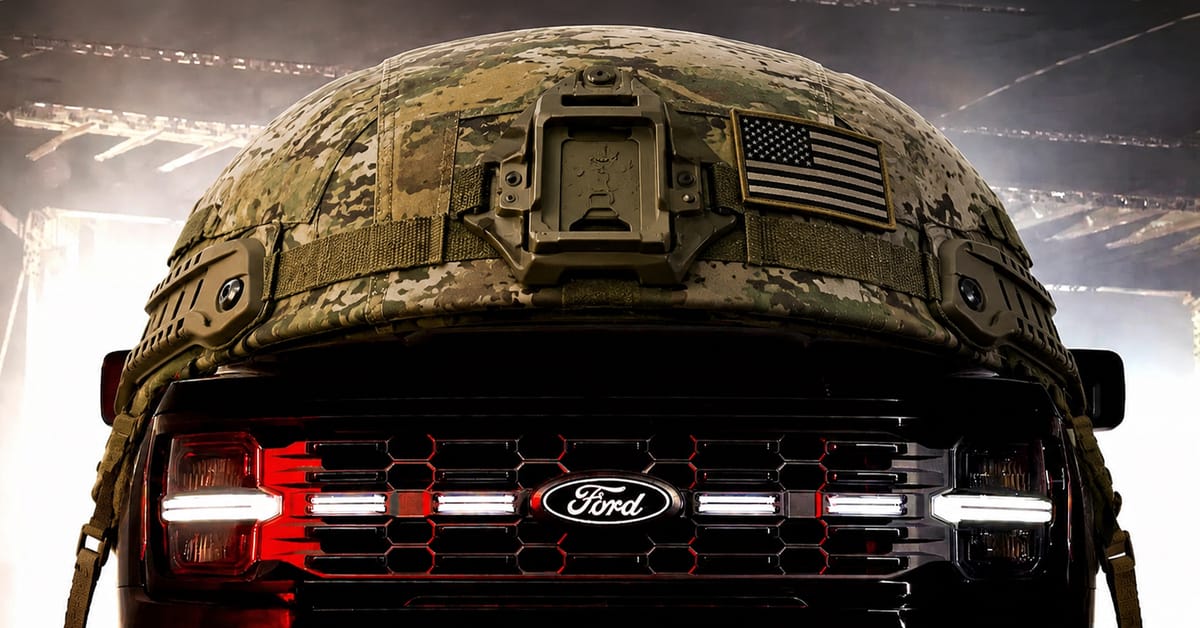
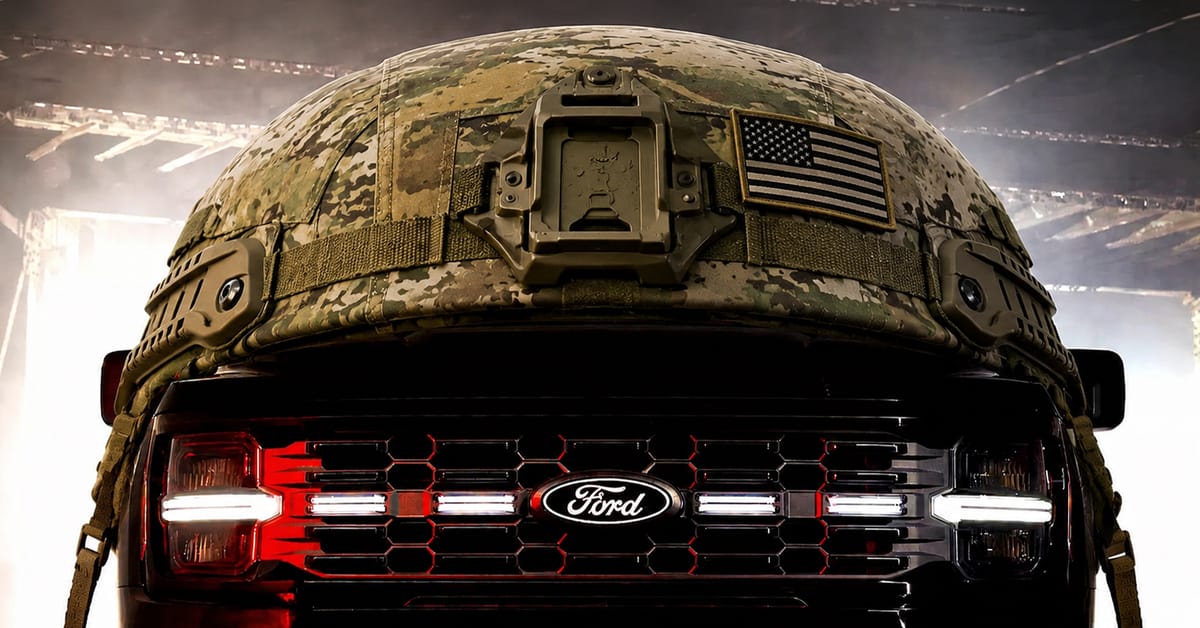
Ford's entry is the latest escalation in a defense-industrial rivalry that has been building since early 2026, when CEO Jim Farley first revealed on the company's May 4 earnings call that Ford was in "early discussions with the US government on defense-related projects." Since then, the company has pitched a commercial off-the-shelf (COTS) strategy centered on its F-Series Super Duty platform, arguing that volume-production trucks can deliver military capability at a fraction of the cost and development time of purpose-built military vehicles.
The Army's Shopping List
The CTT program is organized into several variants covering the Army's full spectrum of tactical wheeled vehicle needs: line-haul tractors for highway transport, heavy equipment transporters for moving armored vehicles, palletized load systems for containerized cargo, and tankers for fuel and water. The current fleet, much of which was fielded during the 1980s and 1990s, is approaching the end of its service life.
The Army has been working toward a modular, open-architecture approach that would allow it to mix and match cab and chassis configurations — an approach that plays directly into Ford's COTS manufacturing model. Rather than designing a single purpose-built military truck, the Pentagon is looking for a family of vehicles built on common components, reducing logistics tail and lifecycle costs.
GM's Position
GM Defense, which established itself as a dedicated defense subsidiary in 2017, already has significant traction with the Army. The company's Infantry Squad Vehicle (ISV) — based on the Chevrolet Colorado ZR2 — has been in full-rate production since April 2023 under a $458.4 million contract. Just last week, GM Defense was reported to be pursuing a potential $1 billion contract for Colorado-based tactical vehicles.
For the CTT program, GM is expected to leverage its experience with integrated military vehicle engineering, including armor integration, C4ISR systems, and full lifecycle sustainment. GM has also been exploring battery-electric field power generation through its Ultium Cells joint venture, which could give it an edge in the Army's push toward operational energy resilience.
Ford's COTS Gambit
Ford's pitch is fundamentally different. The company is not proposing to build a military vehicle from the ground up. Instead, it is offering variants of its Super Duty pickup and commercial chassis as ready-made platforms that can be militarized with armor, weapon mounts, and communications gear.
The approach mirrors what Ford has been testing internationally. The Ranger Super Duty — developed and tested in Australia with a reinforced chassis, a 3.0-liter turbo-diesel V6 producing 600 Nm of torque, and an armored long-range fuel tank — has been pitched to European governments as an off-the-shelf tactical vehicle.
Ford's core argument is speed and cost. Traditional military truck programs take a decade or more from concept to fielding. Ford can deliver production vehicles from its Kentucky Truck Plant — the same line that builds commercial Super Duties — within months, not years. The company has also highlighted its Pro Power Onboard generator system as a unique capability, turning any Ford truck into a mobile field power station without add-on generators.
The Incumbents React
The Ford-GM rivalry overshadows an important reality: both companies are latecomers compared to established defense truck builders. Oshkosh Defense, the incumbent on the current FHTV fleet and the Family of Medium Tactical Vehicles (FMTV), has decades of experience in military truck production. Mack Defense, a Volvo Group subsidiary, and Navistar's AM General division also have deep roots in the tactical wheeled vehicle market.
Oshkosh has been developing next-generation tactical truck concepts under its own research programs and is widely expected to bid aggressively to retain its position. The company's experience with the JLTV program and its work on hybrid-electric drivelines for the eJLTV prototype position it as a strong contender on both cost and technology.
What This Means for the Defense Industrial Base
The CTT competition represents a broader shift in Pentagon procurement philosophy. Army Secretary Dan Driscoll has been explicit about wanting non-traditional defense suppliers in the market, telling Bloomberg in February 2026: "Can you go get GM? Can you get the Fords?"
The entry of Detroit's automakers into defense truck production could reshape the industrial base. Ford's Kentucky Truck Plant alone has the capacity to build hundreds of thousands of vehicles annually — a volume that traditional military truck builders cannot match. If the Army adopts a COTS-heavy approach, it could mean shorter production runs, lower unit costs, and the ability to tap into commercial supply chains for spare parts.
But it also raises questions about sustainment. Military trucks need to operate under combat conditions — with enhanced armor, C4ISR loads, and in extreme environments. Commercial trucks, even heavy-duty ones, require modification to meet military specifications. How much modification is acceptable, and at what cost, will be the central tension of the CTT evaluation process.
The Army has not yet released a formal request for proposals for the CTT program, but industry sources expect a draft RFP later this year, with contract award decisions in the 2027–2028 timeframe. With Ford, GM, Oshkosh, Mack, and potentially Navistar all expected to compete, the race for the Pentagon's next tactical truck fleet is shaping up to be one of the most competitive defense procurement efforts in a generation.
Sources
- Ford CEO Jim Farley on defense discussions — Ford Q1 2026 earnings call transcript, May 4, 2026 — 4 May 2026
- Army Secretary Dan Driscoll on recruiting non-traditional defense suppliers — Bloomberg Interview, February 2026 — February 2026
- Ford's official blog on military vehicle discussions — Ford Media, May 18, 2026 — 18 May 2026
- GM Defense ISV contract details — U.S. Department of Defense contract announcement — 2023 (multiple awards)
- Common Tactical Truck (CTT) program background — U.S. Army Program Executive Office for Combat Support & Combat Service Support — Program overview
- Oshkosh Defense tactical vehicle portfolio — Company capabilities