
Volvo puts its 700 km electric truck into series production and adds an 80-tonne combination
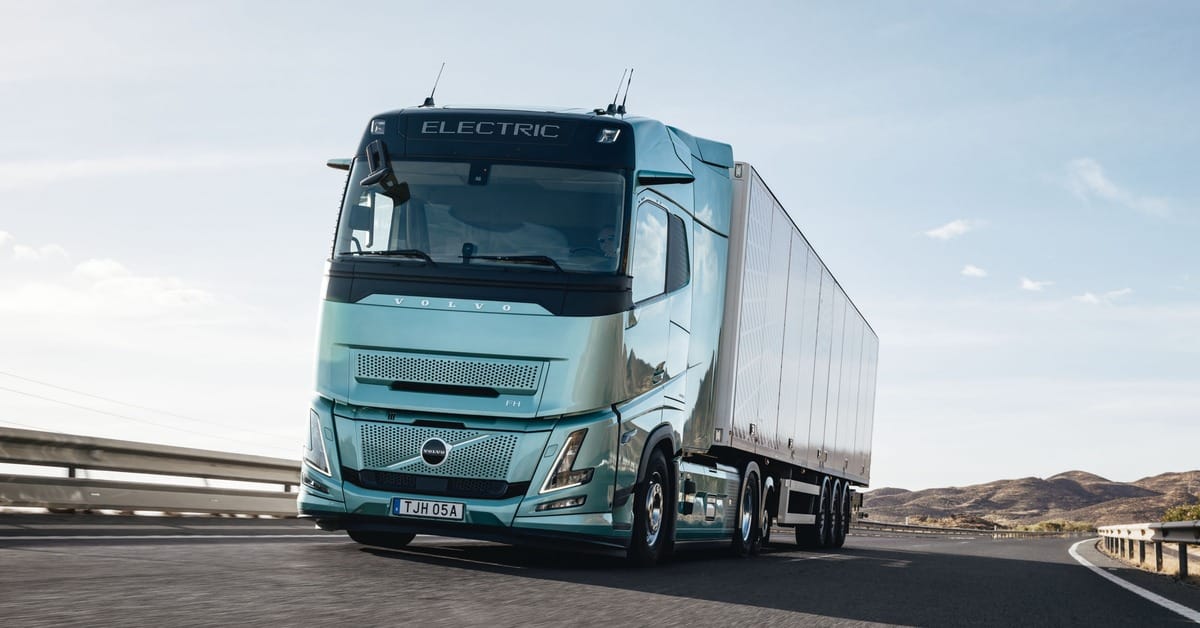
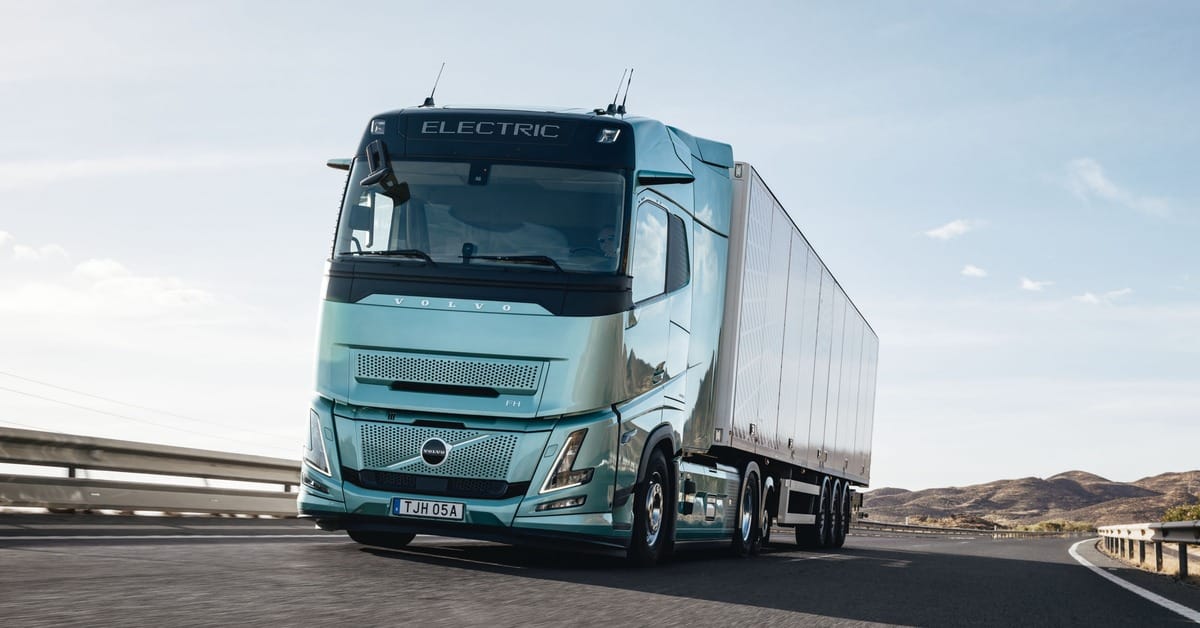
Volvo Trucks has begun series production of its new generation of heavy-duty electric trucks. The first vehicles rolled off the line at the company's Tuve plant in Gothenburg on 14 September, led by the flagship FH Aero Electric with a claimed range of up to 700 kilometres on a single charge. In the same week, Volvo unveiled an electric truck and trailer combination rated for a gross combination weight of up to 80 tonnes.
From launch to assembly line
The new generation was launched in April 2026. The headline figure is the FH Aero Electric's 700 km range, which Volvo attributes to new e-axle technology that frees space for significantly more battery capacity. The same generation includes the Volvo FH, FM and FMX Electric, which get an all-new electric driveline and ranges of up to 470 km.
"We are now turning groundbreaking technology into industrial reality," said Roger Alm, president of Volvo Trucks. "The response from customers is very positive and we see a high interest in ordering the new trucks."
Production is split between Tuve in Gothenburg and Ghent in Belgium. Volvo's electric portfolio now spans eight models, covering distribution, long-haul and construction. The new range is on show at IAA Transportation in Hanover, which runs until 20 September.
An 80-tonne combination for the Nordics
The second announcement addresses a different problem: weight. The new combination pairs a rigid FH Electric or FH Aero Electric with a trailer, and is designed for markets that run heavier loads than the European average. At a gross combination weight of 74 and 76 tonnes, permitted in Sweden and Finland respectively, the range is up to 420 km. At 64 tonnes it rises to 450 km.
Usable battery capacity is 640 kWh. Volvo has added an updated battery monitoring system and improved insulation for colder climates, which the company says lets the batteries work more efficiently and retain more energy. Charging is by megawatt charging (MCS) at up to 680 kW, which takes the pack from 20 to 80 per cent in roughly 36 minutes, or CCS2 at 360 kW, which takes about 70 minutes for the same window.
The combination also introduces hub-reduction axles, raising ground clearance under the axles and improving startability at high gross weights. Volvo names on-road timber transport and lighter construction work as typical applications. An electric power take-off removes the need for a separate diesel generator for refrigeration units.
Sales start in Sweden, Norway, Finland, Denmark, the Netherlands and Switzerland, with the rigid FH Electric rolling out gradually across those markets from early 2027.
"High total weights in truck transport lower both transport costs and environmental impact," said Jan Hjelmgren, senior vice president of product management at Volvo Trucks.
A crowded field for long-haul range
Volvo is not alone in pushing electric range this autumn. At IAA Transportation, Scania and MAN both presented long-haul configurations claiming up to 720 km, using a seventh battery pack mounted behind the cab. Renault Trucks showed its E-Tech T 780 at 660 km.
Volvo Group is also part of the hydrogen coalition that used the same week to set out plans for scaling fuel-cell trucking in Europe, alongside Daimler Truck, Toyota, Bosch, Air Liquide, TotalEnergies, TEAL Mobility and MB Energy. There, hydrogen is framed as a complement to battery-electric trucks for the hardest duty cycles rather than a replacement for them.
Every range figure above depends on weather, wind, route profile, total weight and driving style, and battery capacity that adds range also adds weight that comes off the payload. Charging, more than the trucks, decides how much of the long-haul fleet can switch yet.
Sources
- Volvo starts series production of electric trucks with up to 700 km range — Volvo Trucks press release, 14 September 2026
- Volvo Trucks launches new 80-tonne electric truck with longer range — Volvo Trucks press release, 14 September 2026
- Volvo launches new electric trucks – with ranges up to 700 km — Volvo Trucks press release, 14 April 2026
- Electric trucks at IAA Transportation: a crowded field takes shape — electrive, 17 September 2026
- Industry leaders scale full value chain for hydrogen mobility across Europe — Volvo Group press release, 15 September 2026