
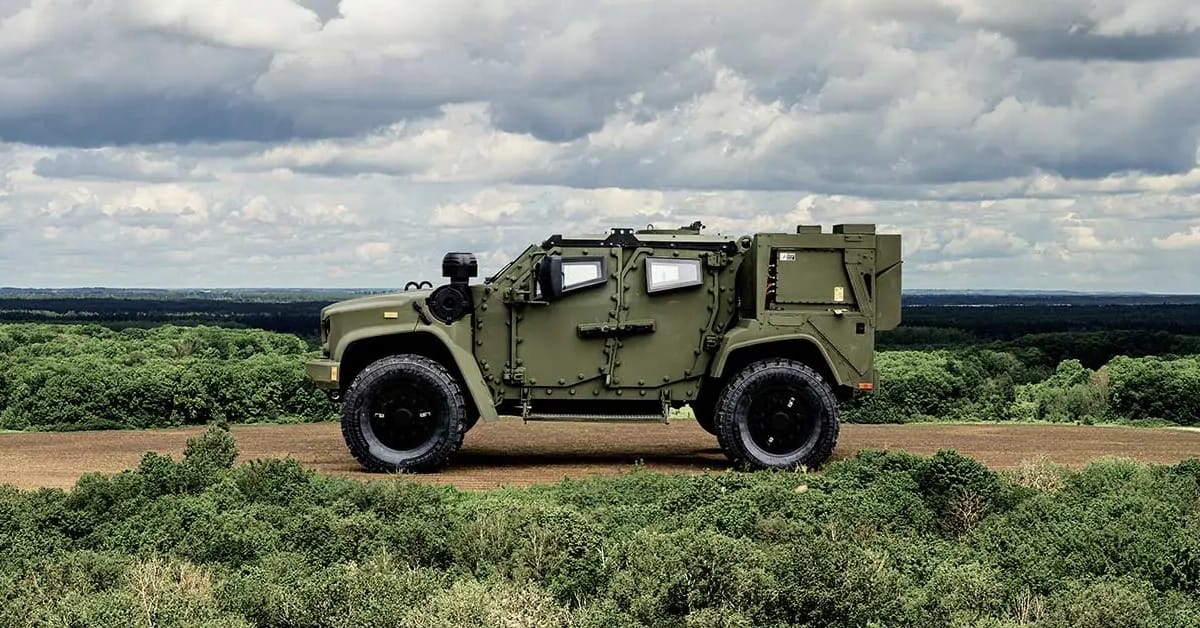
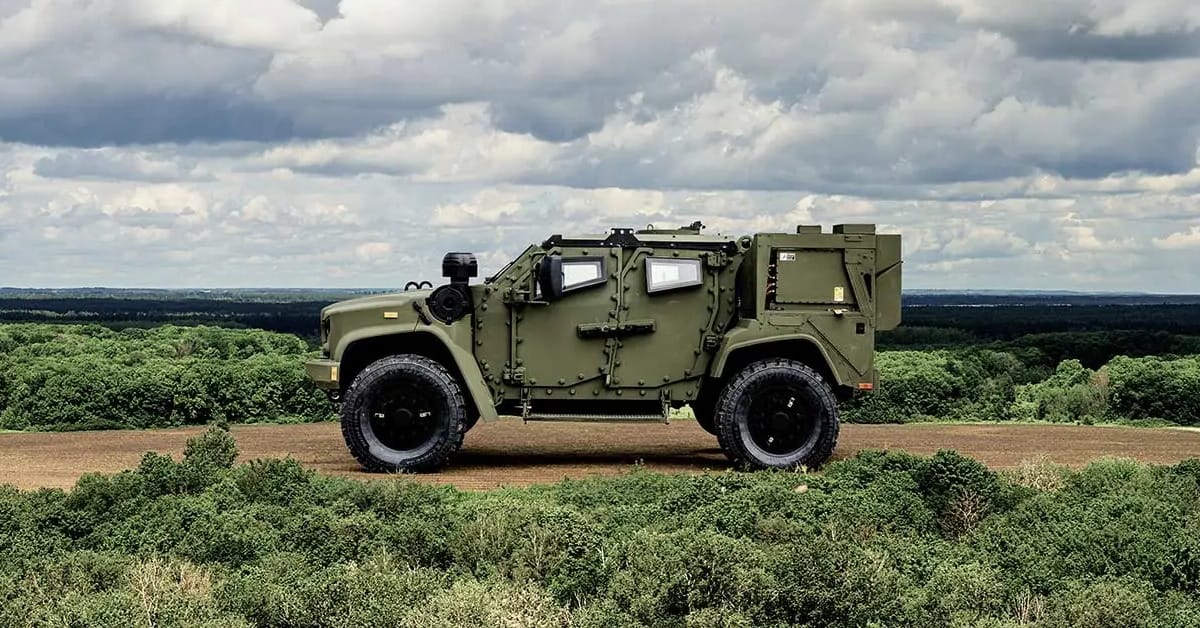
Oshkosh Defense gives the hybrid-electric JLTV its UK debut at DVD 2026
Oshkosh Defense is demonstrating its hybrid-electric Joint Light Tactical Vehicle on British soil for the first time. The eJLTV is at DVD 2026, the Ministry of Defence-sponsored land equipment exhibition at Millbrook Proving Ground on 16–17 September, where visitors can ride in both the standard JLTV and the hybrid variant over the event's obstacle course.
The eJLTV is not a clean-sheet vehicle. It takes the combat-proven JLTV chassis and adds a hybrid-electric drivetrain, which Oshkosh says delivers silent drive, extended silent watch and significant exportable power. When the company first unveiled the concept in January 2022, it quoted a 30 kWh lithium-ion battery, export power of up to 115 kW, and a fuel economy improvement of more than 20 per cent over the base vehicle. Oshkosh also said the battery fully recharges within 30 minutes while the vehicle is running, which removes the need for charging infrastructure — one of the long-standing obstacles to electrifying tactical wheeled vehicle fleets.
Exportable power is the part that matters most in the field. The hybrid system lets a unit run sensors, communications, command-and-control systems, counter-UAS equipment and other mission systems directly from the vehicle instead of towing a generator into position. On a static site, silent watch keeps those systems alive without the engine running. On the move, silent drive cuts the acoustic signature on the final approach to an observation post.
Oshkosh is offering the capability two ways: built into new production vehicles, or supplied as an upgrade kit for JLTVs already in service. The upgrade route is the one the company is pushing hardest, and it is a familiar pitch from an OEM that also converted existing HET A1 tractors into the Enhanced Heavy Equipment Transporter System configuration rather than building a new transporter.
"We believe the quickest way to deliver new capability is to build on what's already proven," said Pat Williams, Chief Programs Officer at Oshkosh Defense. "The system can be integrated into existing JLTV fleets or built into new production vehicles, making it a fast, practical, and low-risk way to expand operational capability without requiring customers to adopt an entirely new platform."
Also on display at Millbrook are the EHET itself — a modification that increases payload capacity on the existing Heavy Equipment Transporter fleet without a whole new platform — and the JLTV Trailer.
The UK context is worth keeping in proportion. The British Army's Land Mobility Programme will replace more than a dozen legacy vehicle types with roughly five designs, and its Light Mobility Vehicle strand specifically replaces the Land Rover and Pinzgauer, both due to leave service by 2030. Oshkosh has not announced a bid for that requirement. The field so far includes General Dynamics Land Systems with Ford and Ricardo on a Ford Ranger-based offer, Supacat with its own light vehicle, a BAE Systems, GM Defense and NP Aerospace team, and Jaguar Land Rover with a military Defender.
The eJLTV is a considerably heavier, protected platform than anything in the Land Rover class, and its hybrid drivetrain answers a different question: how to keep a forward unit's electronics running without a generator. Still, the demonstration puts hybrid-electric mobility and exportable power in front of UK acquisition staff at a point when the programme's detailed requirements are still taking shape — and shows the technology is already built and driven, not a decade away.
Sources
- Oshkosh Defense: "Oshkosh Defense Brings Tactical Mobility Solutions and eJLTV UK Debut to DVD 2026" — published 16. September 2026
- Oshkosh Defense DVD 2026 event page (Booth OR-31, Millbrook, 16–17 September) — published 2026
- Oshkosh Defense: "Oshkosh Defense Unveils First-Ever Silent Drive Hybrid Electric JLTV" (eJLTV specifications: 30 kWh battery, up to 115 kW export power, >20% fuel economy, 30-minute recharge) — published 25. January 2022
- Joint Forces News: "Enhanced Capabilities for the Oshkosh HET A1" (EHETS conversion kits for existing HET A1 fleet) — published 20. December 2023
- Defence Blog: "New team joins competition for UK's Land Rover replacement program" (LMV competitive field, Land Mobility Programme scope) — published September 2026
- ADS Advance: "Seven vehicles competing to replace the British Army's Land Rovers" (Team LionStrike: GM Defense, BAE Systems, NP Aerospace; Jaguar Land Rover's Defender Wolf Series II) — published 14. September 2026
- UK Defence Journal: "The British Army Land Mobility Programme" (LMP scope: over a dozen legacy vehicle types cut to about five designs) — published 7. September 2025