Aramine and Sensmore Deploy Autonomous Battery-Electric Underground Loader at Cemex Germany
A proven battery-electric underground loader has entered the autonomous era. French mining equipment specialist Aramine and German robotics firm sensmore have deployed a fully autonomous version of the ARAMAC L140B at Cemex's underground operations in Germany — marking one of the first instances of a production-ready autonomous battery-electric loader operating in a real European mine.
The deployment brings together two technology trends that are reshaping underground mining: electrification for zero local emissions and autonomy for safer, more productive operations. Rather than a pilot or test installation, the system is vertically integrated into Cemex's daily production workflow — connected to conveyor belts, safety systems, network infrastructure, and operator interfaces.
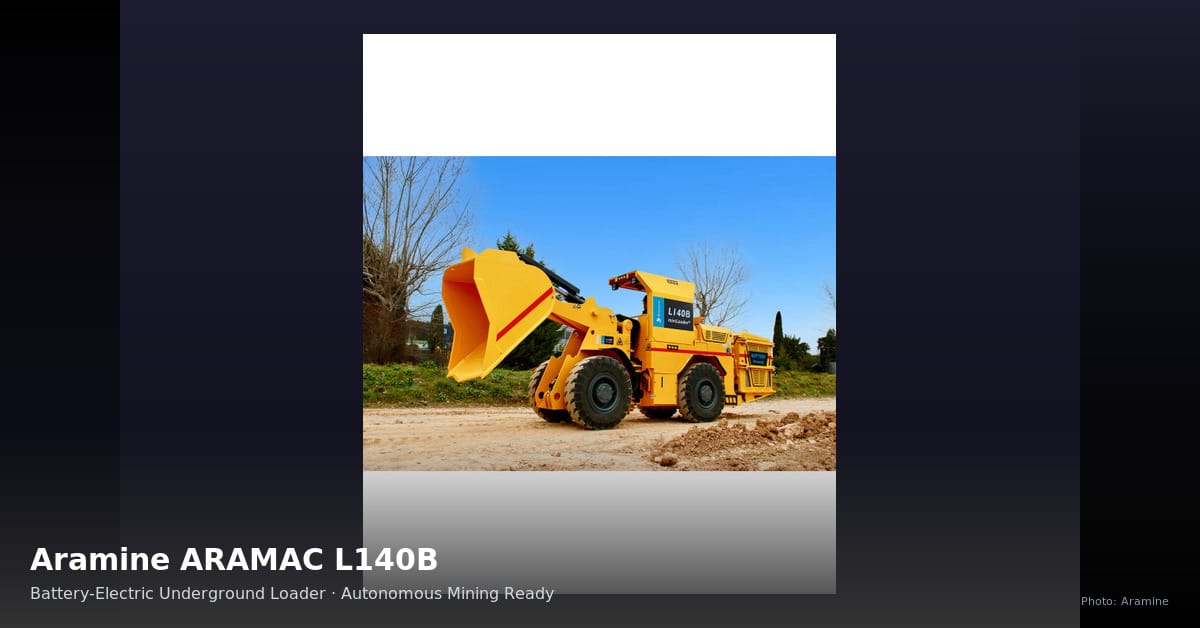
The Machine: ARAMAC L140B
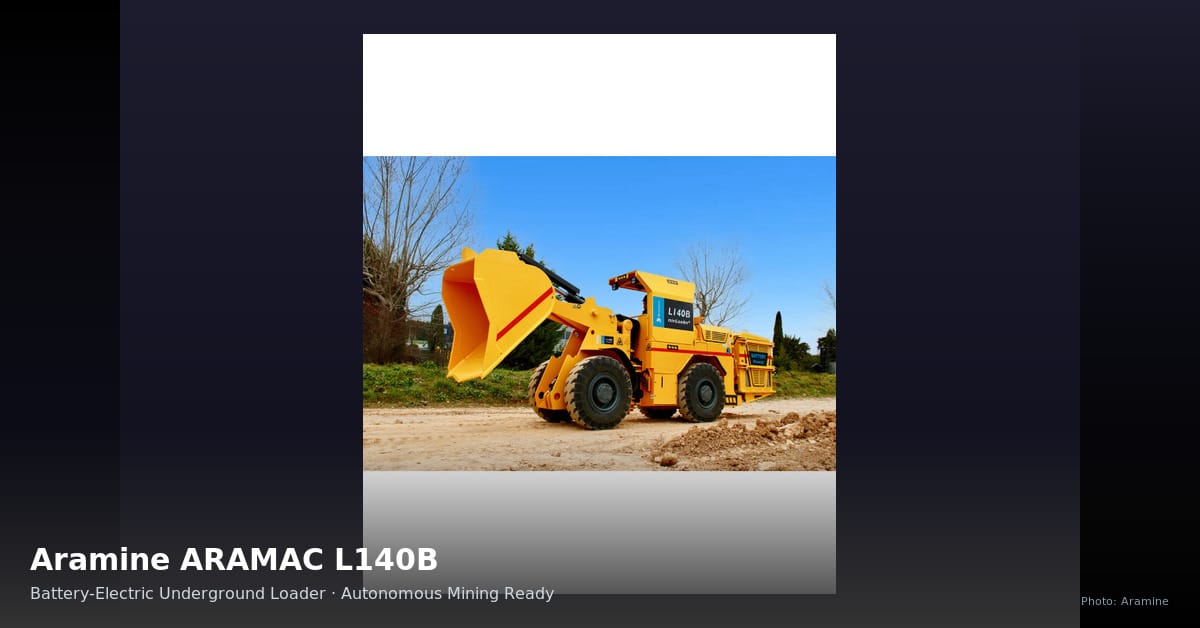
First launched in 2016, the ARAMAC L140B is a battery-electric underground loader designed for narrow-vein mining. With a payload capacity of 1.3 tonnes, the compact machine was built from the outset with openness for autonomous control — a design philosophy that made the retrofit to full autonomy feasible.
In manual operation, the L140B delivers approximately five hours of running time per shift. In autonomous mode, that figure rises to up to eight hours — a 60 percent increase in machine availability. The battery-electric drivetrain produces zero local CO₂ emissions, improving air quality in confined underground spaces where diesel exhaust has traditionally been a significant health and safety concern.
The Autonomy Stack: Sensmore's Vertical Integration
Berlin and Potsdam-based sensmore provided the full automation stack, including machine control, functional safety architecture, underground communications, and operator interfaces. Rather than bolting autonomy onto the machine in isolation, sensmore integrated the L140B into the entire underground production environment.
"This is how autonomous machines become part of industrial reality today," said Maximilian Rolf, CEO and Co-founder of sensmore. "Autonomy in heavy industry only creates real value when it is vertically integrated into the production environment. At Cemex, we are integrating the Aramine L140B into the entire underground process."
The integration scope covers conveyor belt synchronization, safety system interlocking, production flow management, and network connectivity — ensuring the autonomous loader operates as a native component of the mine's industrial ecosystem, not as a standalone experiment.
Operational Impact at Cemex
For Cemex, the German building materials giant, the deployment addresses three priority areas: productivity, safety, and sustainability.
The extended operating hours from autonomous operation improve machine utilization without requiring additional operator shifts — particularly relevant in an industry facing chronic skilled labor shortages. Equally important is the safety benefit: removing operators from the cab eliminates exposure to underground hazards such as rock falls, dust, noise, and the confined working environment inherent in narrow-vein operations.
"Implementing this system is a major milestone for us," said Christian Zinnecker, Coordinator Underground Operations, Extraction & Blasting at Cemex. "It helps improve productivity, reduces operator exposure to underground risks, and supports our journey toward safer and lower-emission mining operations."
Strategic Significance for Europe
The deployment comes at a time when European policymakers are pushing to increase domestic extraction of critical raw materials — reducing reliance on imports from outside the continent. Autonomous, electric mining equipment is seen as a key enabler for making European mining operations economically viable and socially acceptable.
Marc Melkonian, Co-President of Aramine, framed the project in strategic terms: "The next step is to take raw materials under our feet, under our ground, in Europe, and not on the other side of the world. For that, we are not going to send people underground, but we are going to send machines that are capable to do it by themselves."
With operations in 88 countries and more than 50 years in the underground mining equipment business, Aramine is betting that the combination of battery-electric power and full autonomy represents the future of narrow-vein mining — and the Cemex deployment provides a real-world proof point that the technology is ready for industrial-scale adoption.