Hydrogen coalition sets out full plan to scale fuel-cell trucking in Europe
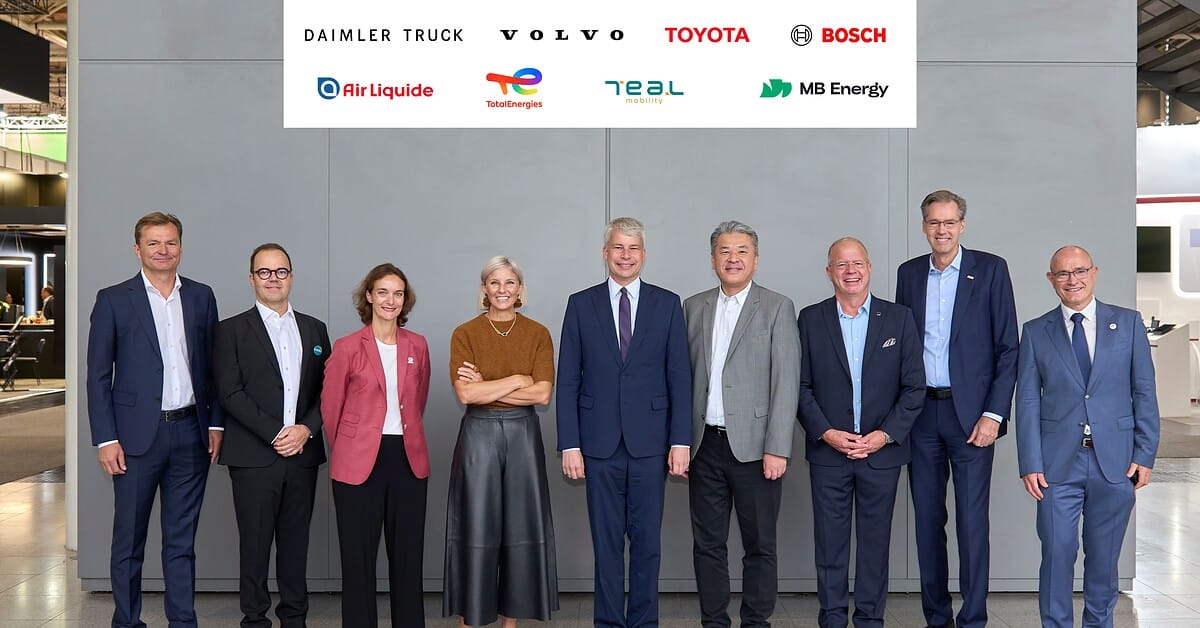
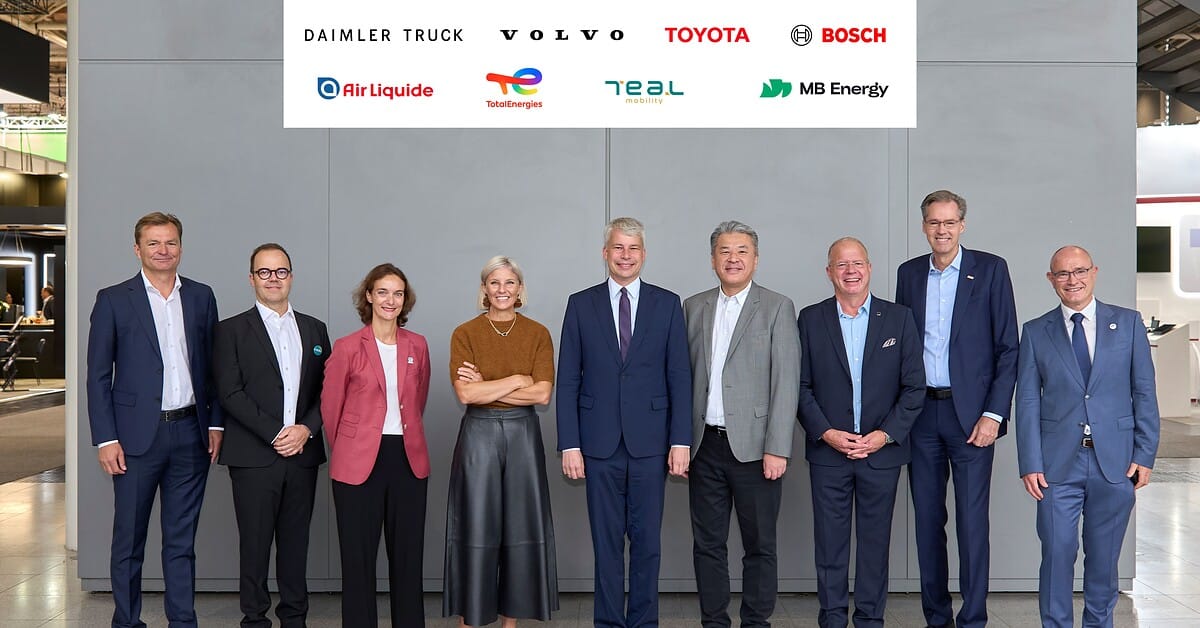
Volvo Group, Daimler Truck, Toyota Motor Corporation, Bosch, Air Liquide, TotalEnergies, TEAL Mobility and MB Energy today set out the full details of their joint plan to scale hydrogen-powered heavy trucks in Europe, at a CEO-led press event at IAA Transportation in Hannover.
The partners say Germany is the first market in Europe to have assembled every condition needed for a scalable deployment of hydrogen trucks by 2030 — supportive policy, a strong OEM offering and an integrated hydrogen supply chain and infrastructure — and present it as a baseline for scaling the approach across the continent.
Hydrogen is positioned as a complement to battery-electric trucks rather than a replacement, for operations that require long range, high payload, fast refuelling and operational flexibility.
The coalition points to Germany's NOW funding programme as the clearest evidence of commercial pull: the call was oversubscribed, with industrial companies applying for more than 70 high-capacity refuelling stations and 800 heavy-duty trucks. Ministry figures show 526 applications worth €455m against a €220m budget, including 71 station proposals and 455 vehicle and fleet proposals, with awards due in the second half of 2026.
On vehicles, Daimler Truck says customers have driven almost 600,000 kilometres with fuel cell trucks. It plans a small series of 100 next-generation fuel cell trucks into customer operations from the end of 2026, is preparing its first hydrogen combustion engine trucks for market launch next year, and is investing a mid-three-digit million euro amount in hydrogen trucks by the end of the decade. Volvo Group is advancing both fuel cell and hydrogen combustion trucks towards 2030, Toyota supplies fuel cell systems as a technology partner, and Bosch provides gaseous hydrogen components and refuelling technology for liquid and gaseous hydrogen.
Air Liquide, TotalEnergies and MB Energy, together with the TotalEnergies–Air Liquide joint venture TEAL Mobility, are developing high-throughput stations able to refuel up to 100 trucks per day along strategic European corridors, synchronised with fleet deployment. The coalition names three levers to close the cost gap with diesel: incentives and series production to lower truck prices, greenhouse gas quota mechanisms for fuel pricing, and operating incentives such as zero-emission toll exemptions.
The partners are now calling on national governments and the European Commission to replicate the German model at continental scale, including synchronised funding calls for refuelling stations and vehicles to meet the EU's AFIR targets.
Sources
- Industry leaders scale full value chain for hydrogen mobility across Europe (AB Volvo press release, PR Newswire) — published 15 September 2026
- Industry leaders scale full value chain for hydrogen mobility across Europe (Volvo Group newsroom) — published 15 September 2026
- Industry leaders to join forces to scale hydrogen mobility (Volvo Group pre-announcement) — published 3 September 2026
- Schnieder: Wir schaffen die Grundlage für ein verlässliches Wasserstofftankstellennetz im Schwerlastverkehr (BMV press release 058/2026) — published 1 July 2026
- Initiales H2-Lkw-Netz: Bund meldet über 500 Anträge für Wasserstoff-Förderung (electrive.net) — published 2 July 2026