LKAB Puts 120-Tonne Battery-Electric Trucks Into Production 1,250 Metres Underground
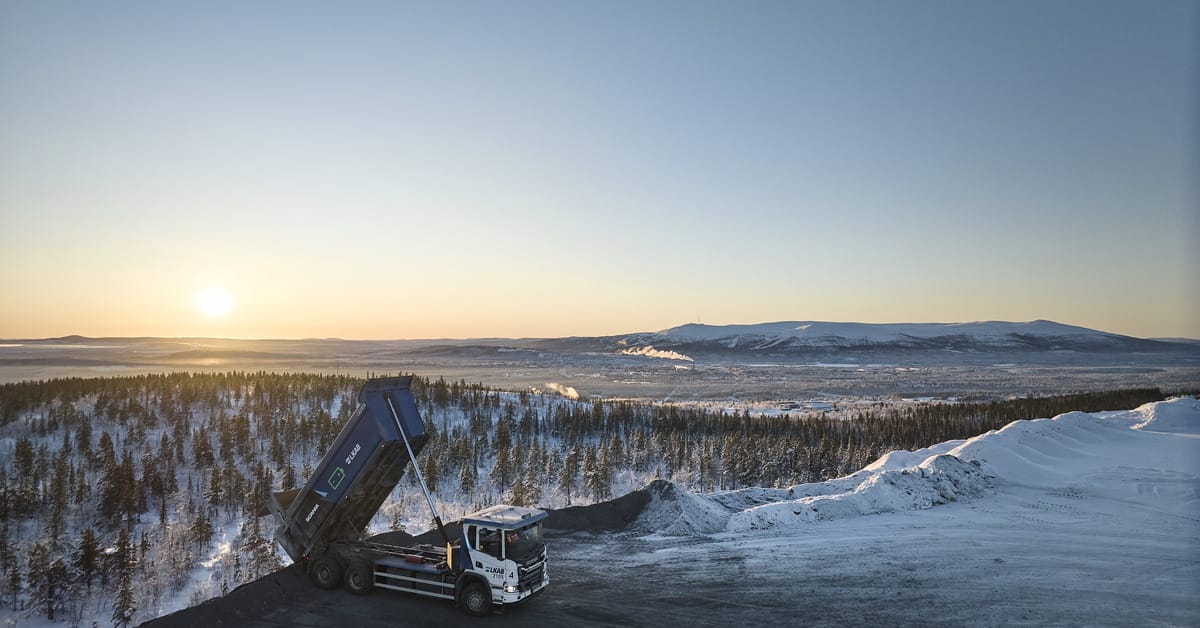
Two Scania-built battery-electric semi-trailer trucks are hauling iron ore in full production at LKAB's Malmberget mine in northern Sweden — 1,250 metres below the surface. The 120-tonne machines are described as the world's largest and heaviest battery-electric vehicles in underground operation, and the commissioning record backs up the billing: more than 100,000 tonnes of ore moved over roughly 1,500 round trips before the trucks were cleared for regular duty.
"This is what electrification looks like when it moves beyond demonstrations and into everyday mining," said Peter Gustavsson, LKAB's project manager for electrification.
From commissioning to production
The trucks are Scania semi-trailer tippers with a payload capacity of just over 70 tonnes and 624 kWh of battery energy. During commissioning they worked 800-metre to 2.5-kilometre loops between ore chutes and crushers, averaging about seven hours of operation and 45 round trips per charge — roughly 3,200 tonnes moved on a single battery. A 375 kW charger takes the pack from zero to 100 per cent in about 80 minutes. It is the first time Scania's battery-electric trucks have been used in heavy underground mining operations.
For Gustavsson, the milestone says less about the hardware than about what the hardware proves. "This is not a laboratory test," he said. "This is a real underground mine. Real production. Real operators. Real tonnes moved. Building a 120t battery-electric truck is one challenge. Making it productive, reliable, safe and available 1250m underground, shift after shift, is the real challenge."
The 24/7 test
The trucks currently run two 16-hour shifts a day. Next up, according to Gustavsson, is a 24/7 operation aimed at demonstrating diesel-equivalent performance metrics — the benchmark that will ultimately decide whether battery-electric haulage can replace LKAB's diesel fleet in the mine.
Underground conditions are on the technology's side. "The environment is dark, but it's ideal for electric vehicles," said Pär Sundqvist, an electrification engineer at LKAB. "We have good roads and a constant temperature of around 12 to 15 degrees Celsius, which is perfect for batteries." And the machines do the job with zero tailpipe emissions at the point of use.
A precedent, not a pilot
The Malmberget operation builds on a Scania 25P XT electric heavy tipper that has hauled ore on the surface at the mine since 2022 — 49 tonnes gross, in daily operation, and popular with operators. That truck proved the drivetrain in Sweden's harsh northern climate; the new machines are testing it where the actual work happens, deep below.
Electrification at LKAB scale
LKAB is not a niche test site. The state-owned company accounts for about 80 per cent of the iron ore mined in Europe each year and sold more than US$3 billion of iron products in 2025 — US$3.5 billion in minerals overall. Malmberget alone moves more than 50,000 tonnes of ore a day, and the company also operates the larger Kiruna underground mine inside the Arctic Circle.
The target is 30 per cent of the mining fleet electrified by 2027, covering hauling and loading of at least five million tonnes a year without emissions. If the 24/7 trial delivers diesel-equivalent availability, that target — and the wider case for battery-electric equipment in heavy industry — moves from ambition to production plan. For fleet owners watching from the surface, the Malmberget numbers are the kind of operating data that turns electrification from a demonstration story into a procurement decision.