Renault Trucks brings a new 13-litre diesel to a show that is arguing about diesel's future
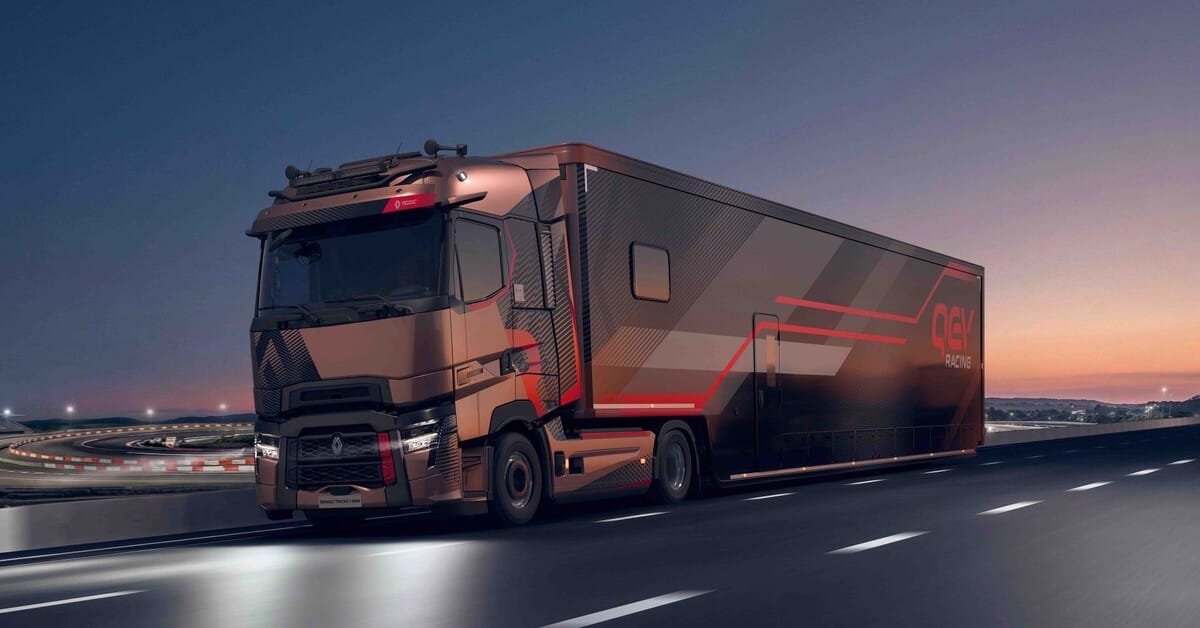
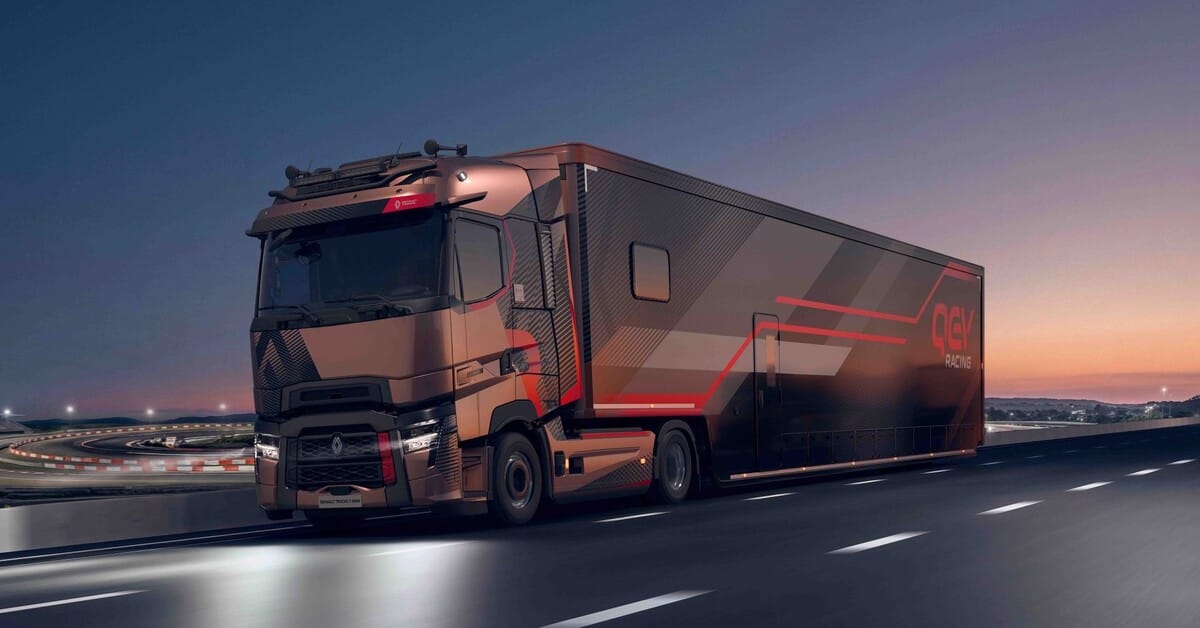
Renault Trucks has unveiled the 2027 T High and the engine underneath it at IAA Transportation in Hanover: the DE13 R, an all-new 13-litre diesel aimed at cutting fuel consumption rather than chasing a single emissions standard. It shared a 923 m² stand in Hall 21 with the brand's electric line-up, which now stretches from a 14-tonne urban distribution truck to a 660 km long-haul tractor.
The show opens to the public from 15 to 20 September. On the eve of it, the chief executives of Europe's seven largest commercial vehicle makers — Renault Trucks' parent Volvo Group among them — asked the EU to postpone the 2030 CO2 compliance deadline by three years.
What the DE13 R actually is
The DE13 R is a 13-litre inline six-cylinder turbodiesel producing up to 540 hp (397 kW) and 2,800 Nm of peak torque at 900 rpm — which Renault Trucks describes as the highest torque on the market for a 540 hp engine.
Maximum cylinder pressure has been raised to 250 bar, and a new fuel supply system with an external high-pressure fuel pump is credited with improving injection precision and cutting energy losses. High-strength grey iron and compacted graphite iron in the casting contain those pressures while extending the engine's working life.
It is fitted as standard with a more powerful engine brake, OptiBrake+. It also meets the NNR3 noise standard, making it significantly quieter than the engine it replaces — a detail that counts for night-time deliveries and urban construction sites.
Renault Trucks is rolling the powertrain out across its T, T High, C and K ranges, so long-haul and construction customers get it at the same time.
Four percent, and the fine print
Renault Trucks quotes a reduction in fuel consumption and CO₂ emissions of up to 4% against the previous generation, "depending on usage". The saving does not come from the engine alone. A new generation of Optidriver gearboxes shifts up to 20% faster, and Optivision+ predictive cruise control uses topographical data and road signs to adapt gearing, acceleration and speed to the road ahead.
The most interesting item is the Predictive Engine Stop Start system. Built on the predictive cruise control, it shuts the engine down entirely during freewheeling phases — Renault's Optiroll function — while keeping steering and electronics fully operational, restarting instantly when required. In effect, it is sailing for a 40-tonne truck.
Aerodynamics complete the package, and a Smart Racer2 variant bundles the full efficiency specification, including low rolling resistance tyres.
Critically, the DE13 R is compatible with HVO and B100 renewable fuels. For operators already running hydrotreated vegetable oil, that is the difference between a lifecycle CO₂ reduction and none at all.
A dual-track strategy, not a retreat
Renault Trucks presents the diesel launch as one of several complementary levers rather than a counterargument to electrification. "Alongside the acceleration of the development of our electric offer, we continue to improve the energy efficiency of our combustion-engine vehicles," said Antoine Duclaux, President of Renault Trucks.
The market data explains the emphasis. According to ACEA, only 2.4% of new heavy-duty vehicle registrations in Europe are zero-emission, with Germany at 4.3% and France at 2.4%. Fewer than 2,000 public chargers suitable for heavy trucks are in operation across the continent, against an estimated need for at least 700 new installations every month.
In that gap, a truck that burns 4% less fuel is a proposition operators can buy today — and Renault Trucks is not alone in saying so. Daimler Truck used the same show to present a new conventional Powerliner powertrain, MAN displayed a 60-tonne TGS 8x4 for mining, and Volvo Trucks brought updated diesel drivelines alongside its new FH Aero Electric.
The electric side, in brief
The E-Tech T 780, a new long-haul model, reaches up to 660 km on a new electric axle and high-density NCA batteries, with a payload of up to 27.4 tonnes. The E-Tech T 540 covers up to 450 km in regional distribution, and the compact E-Tech D 14T is built for city work with a sub-7.3-metre turning radius.
The DE13 R is not intended to replace any of that. It is designed to sell alongside it.
Sources
- Renault Trucks at IAA 2026: practical solutions to accelerate the decarbonisation of road transport (Renault Trucks press release) — published 1 July 2026
- New Renault Trucks powertrain: boosting fuel efficiency by up to 4% (Renault Trucks press release) — published 4 June 2026
- World premiere of Renault Trucks' T High and DE13 R engine at IAA Transportation (Power Progress, KHL Group) — published 26 August 2026
- Europe's truckmakers seek a three-year delay to CO2 rules (Automotive World) — published 15 September 2026
- Press Day 2026 (IAA Transportation official newsroom) — published 14 September 2026