Toyota Takes One-Third of Cellcentric as Hydrogen Truck Race Consolidates
Toyota Motor Corporation has signed a binding agreement to take an equal one-third stake in cellcentric, the heavy-duty hydrogen fuel-cell joint venture founded by Daimler Truck and the Volvo Group in 2021. Signed on 27 July 2026 and expected to close around year-end 2026 or early 2027 pending regulatory approval, the deal turns a two-owner venture into a three-way partnership — and puts the world's largest automaker's fuel-cell technology directly into the commercial-vehicle arena.
Three owners, one fuel-cell platform
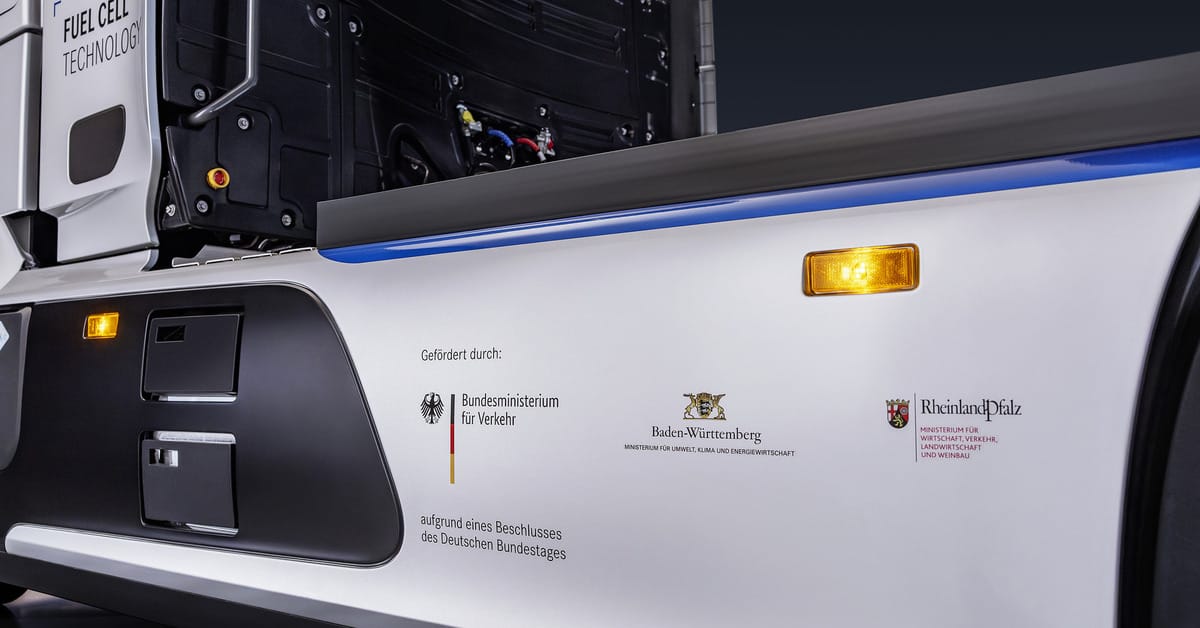
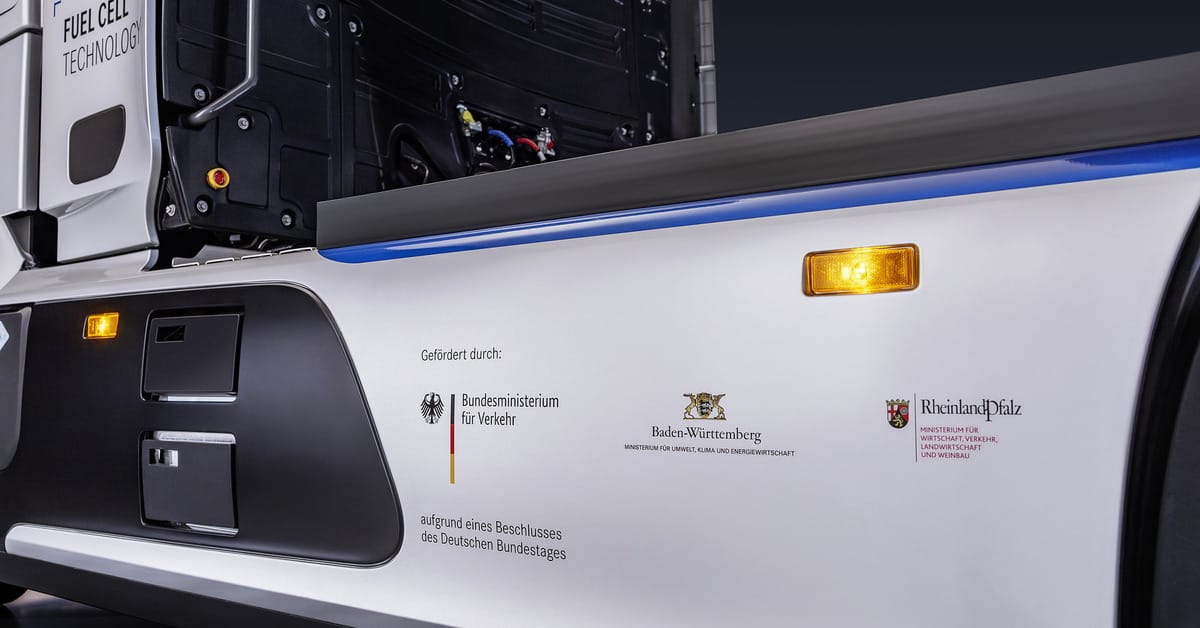
The agreement follows the non-binding memorandum of understanding announced at the end of March 2026. Once the transaction completes, Daimler Truck, the Volvo Group and Toyota will each hold 33.3 percent of cellcentric. Toyota's contribution is its core fuel-cell technology — cells, materials and stacks — and Toyota and cellcentric intend to jointly manage the development and production of fuel-cell unit cells, the core component of fuel-cell systems, along with the directly linked architecture and control elements.
Cellcentric will continue to operate as an independent Tier 1 supplier serving heavy-duty on-road and off-road transport, plus coaches, stationary power generation, rail and heavy off-highway equipment. The three shareholders remain competitors in all other areas of their businesses.
The venture brings together two decades of commercial-vehicle fuel-cell development with Toyota's passenger-car pedigree. "Cellcentric's deep expertise in commercial fields, together with Toyota's over 30 years of fuel-cell development in the passenger car sector, can combine their strengths to deliver one of the world-leading fuel cell systems for heavy commercial vehicles," Toyota president and CEO Koji Sato said when the partnership was first mooted in March. Cellcentric employs more than 560 people at sites in Kirchheim/Teck, Esslingen and Stuttgart in Germany and Burnaby, Canada, and holds roughly 700 patents. Toyota began producing second-generation compact fuel-cell modules in Europe in January 2022.
A race Hyundai started — and governments are scaling
The consolidation sharpens a contest that is already crowded. Hyundai Motor mass-produced the Xcient, the world's first heavy-duty hydrogen-electric truck, in 2020; the model has since logged more than 27 million kilometres in cumulative fleet operations across Switzerland, Germany, France, the United States and Canada.
State-backed programmes are building the ecosystem around the hardware. China has deployed roughly 40,000 hydrogen-electric vehicles and 574 refuelling stations under a support pool worth about 8.5 billion yuan (about USD 1.26 billion), and targets 100,000 vehicles and hydrogen at 25 yuan per kilogram or less by 2030. Japan's "Hydrogen Artery" plan concentrates 1,500 hydrogen commercial vehicles on major east-west trunk routes over ten years. The EU is tightening CO2 regulations for heavy-duty vehicles, pushing fleets toward zero-emission powertrains.
Korea: technology lead is not market lead
For South Korea, the signal is caution. Industry officials warn that Hyundai's first-mover position in hardware has not automatically translated into ecosystem dominance — refuelling networks, maintenance and operating models ultimately decide commercial viability. Calls are growing for the government to designate hydrogen logistics corridors, link them to a long-term vehicle deployment strategy, and extend fuel subsidies and highway toll reductions.
"The cooperation between Daimler Truck, the Volvo Group and Toyota will highlight the growth potential of the hydrogen commercial vehicle market and serve as a catalyst that injects new energy into it," one industry official told Seoul Economic Daily.
For fleet buyers, the practical effect of the deal is supply-side consolidation: fewer, larger fuel-cell platforms backed by three of the industry's biggest OEMs, competing against Hyundai's proven Xcient and Chinese state-supported platforms. The hydrogen truck race will be decided as much in refuelling corridors and regulatory frameworks as on the test track.
Sources
- Toyota Motor Corporation, Volvo Group and Daimler Truck have signed binding agreement for Toyota to join cellcentric as equal shareholder — Volvo Group press release — 27 Jul 2026
- Toyota, Volvo Group and Daimler Truck AG sign binding agreement for Toyota to join cellcentric as equal shareholder — Toyota Global Newsroom — 27 Jul 2026
- Daimler Truck, Volvo Group and Toyota Motor Corporation sign binding agreement for Toyota to join cellcentric as equal shareholder — cellcentric — 27 Jul 2026
- Toyota Enters Hydrogen Truck Race as Korea Warns of Falling Behind — Seoul Economic Daily — 18 Aug 2026
- Korean automakers call for gov't support as Toyota joins hydrogen truck race — Pulse by Maeil Business News Korea — 19 Aug 2026